

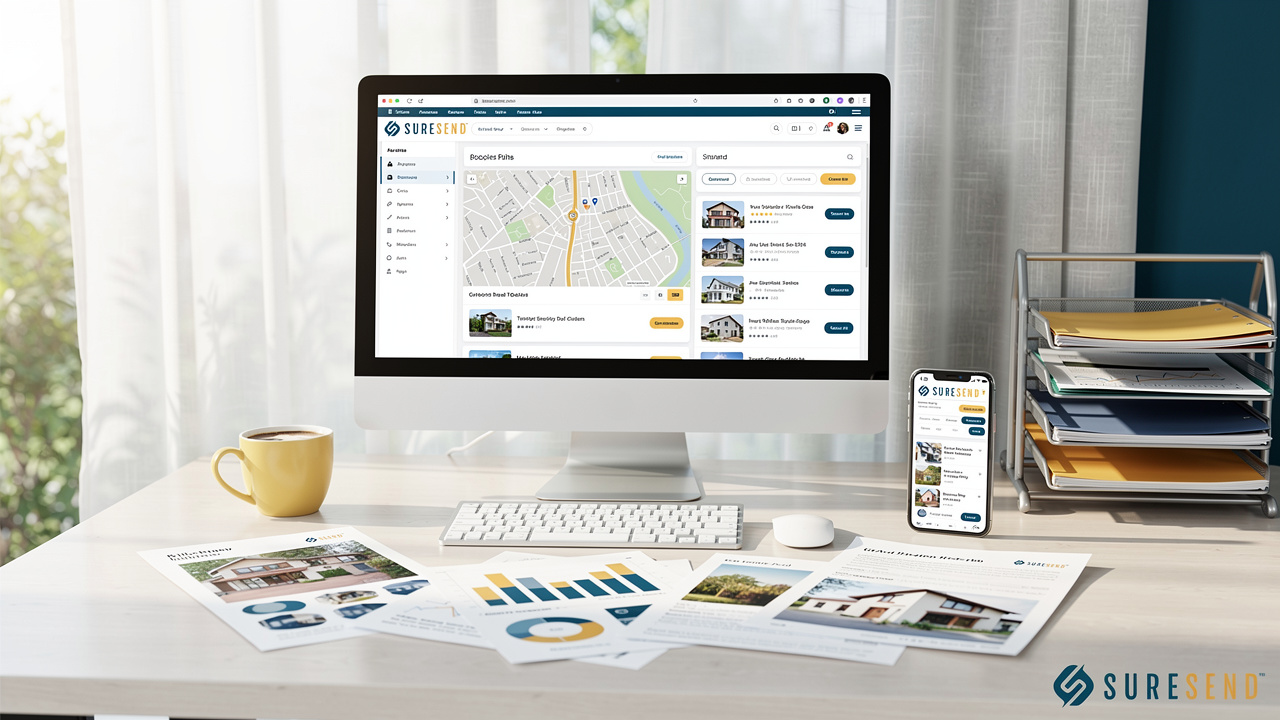
Top CRM with IDX Real Estate Website Solutions for Success
Picking a CRM with IDX real estate website setup usually turns into a contest over which template looks best, not which system keeps a lead warm after the third week of silence. That’s the wrong place to start. The real question is what happens to a contact’s data the moment they view a listing, save a search, or stop responding altogether.
The best CRM for agents running IDX websites is one built with native, two-way integrations and its own first-party property data, not a plugin that drops a lead into a database once and forgets about it. A real estate CRM with IDX integration should track saved searches, listing alerts, and repeat views as they happen, then turn that activity into follow-up without a manual push. This guide breaks down the three common ways a CRM connects to an IDX website, where each model creates risk or advantage, and where Sure Send, an AI-first CRM built for real estate and mortgage professionals, fits into that picture.
Keep reading to see which model actually protects your leads and your data.
Key Takeaways
The three CRM and IDX integration models, and how each one is structurally different
Why connector-based setups can create one-way data flow and stale activity
Two-way data and real-time automation triggers matter more than refresh speed alone
Data control and vendor dependence as a hidden cost inside your tech stack
How to match the right model to your team size and growth stage
What Does “CRM With IDX” Actually Mean?
A CRM with IDX real estate website is a setup where IDX-powered property search feeds leads into a CRM that manages the relationship after that first click. IDX stands for Internet Data Exchange, a policy that lets a participating broker display eligible MLS listings on their own branded site instead of sending every buyer to Zillow or Redfin. The MLS is the cooperative database holding the listing data; IDX is simply the rulebook and the pipe that lets authorized brokers pull that data onto their own pages.
Think of the MLS as the warehouse and IDX as the delivery truck that brings inventory to your storefront. The National Association of Realtors sets the baseline rules for how often that delivery has to happen, and most providers now move faster than the minimum requirement. None of that, however, tells you what happens to the buyer once they arrive.
That’s where the phrase gets fuzzy. A real estate website with CRM and IDX can mean a CRM that simply receives leads from an existing IDX site, a single vendor selling both the website and the CRM as one bundle, or a CRM with its own first-party search technology built in house. These are not interchangeable, and the difference shapes everything from lead quality to who actually owns the client relationship.
The Three Common Models for Connecting a CRM to IDX
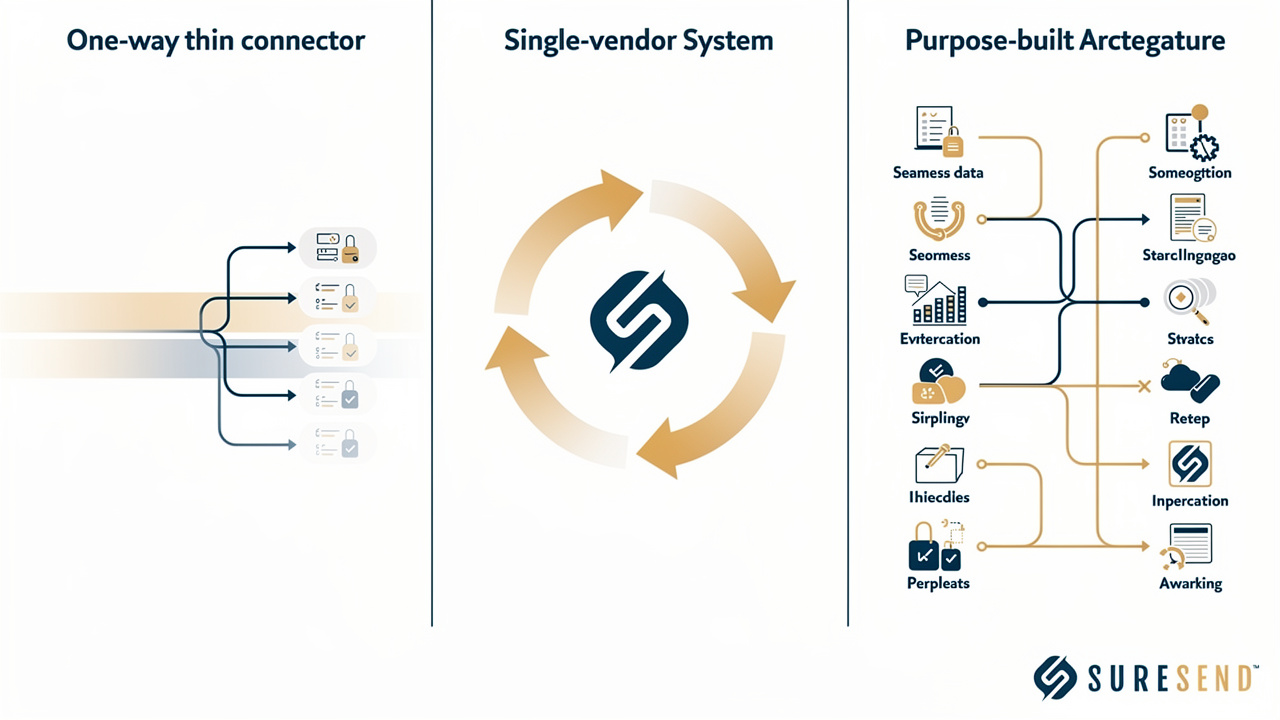
Every IDX CRM real estate setup on the market today falls into one of three structural camps, and knowing which camp you’re in matters more than any individual feature comparison. The first model relies on a connector or plugin, a middleware tool that watches an existing IDX website for new form submissions and pushes that contact into a separate CRM. The second model is an all-in-one bundle, where a single vendor builds the website and the CRM together so data theoretically stays in one place from day one. The third model is a purpose-built CRM connected to first-party home-search infrastructure, where the search technology and the CRM are built and maintained by the same engineering team rather than stitched together after the fact.
The connector model sits between an existing IDX website and a CRM that was never designed to talk to it directly. Tools like Zapier watch for a form submission, grab a handful of fields, and drop them into the CRM as a new contact. It works for basic capture, but it’s limited to whatever fields that particular connector was built to recognize, and in many cases it doesn’t pass along the richer behavioral context sitting on the website side. Not every connector behaves the same way, some are better maintained than others, but the structural risk of a thin, one-time handoff is common across most of them.
The all-in-one bundle pairs a website builder with CRM functionality from the same company, which removes one layer of middleware. Real Geeks and Sierra Interactive both take this approach, folding IDX CRM buyer signals into a single login. The tradeoff is that you’re locked into one vendor’s roadmap for both halves of the product, and switching either piece later means rebuilding both.
The purpose-built CRM with first-party search treats property data as a core input to the CRM itself, not an external feed. Instead of waiting on a plugin to relay a lead, the CRM reads directly from the same data layer powering the search experience, so property views, saved searches, and valuation requests update the contact record the instant they happen.
How Each Model Handles Lead Flow
The moment a buyer submits a form, these three models behave very differently. A connector-based setup typically passes a name, email, phone number, and maybe the single property that triggered the form, then the connection often goes quiet until the next submission arrives.
An all-in-one bundle usually passes richer context because the website and CRM share a database, though the depth still depends on how tightly the vendor built that internal link. A purpose-built CRM with native search infrastructure captures the full session, including prior searches and saved listings, because the CRM and the search tool were never separate systems to begin with.
Why Two-Way Data Flow Matters More Than You Think
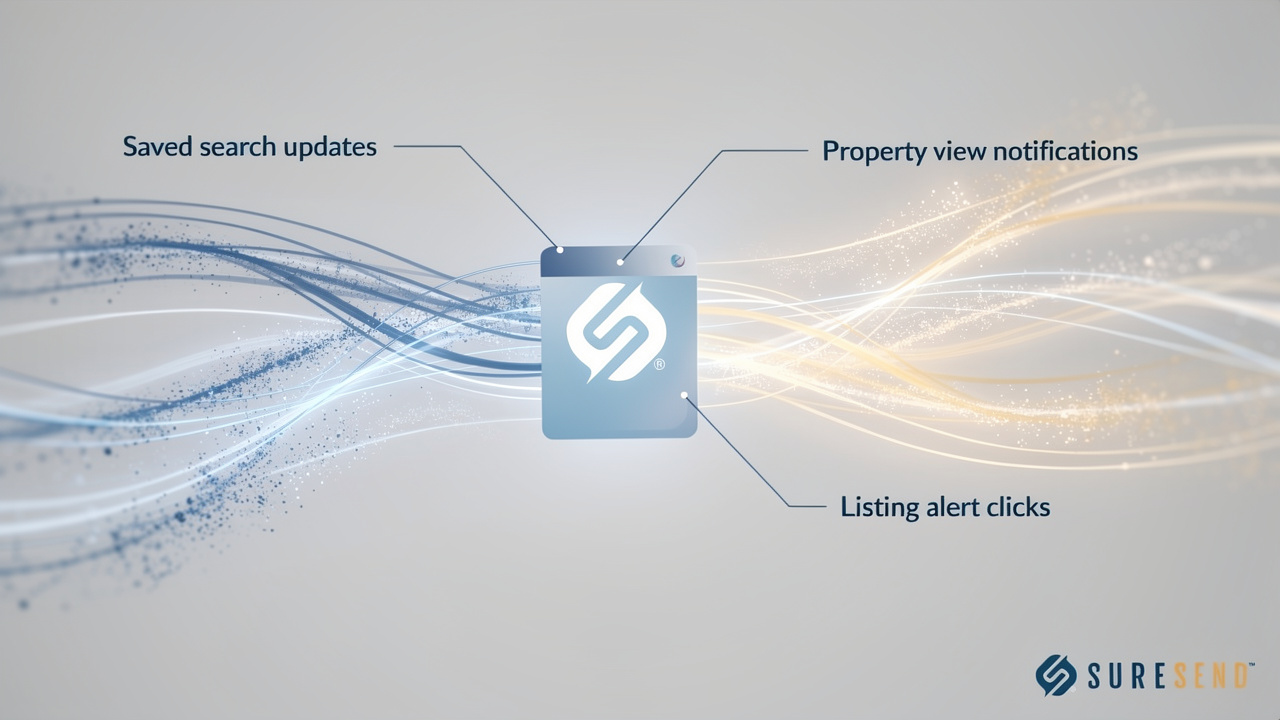
Two-way data flow means a CRM can both receive a new lead and continuously pull in that lead’s ongoing activity, rather than capturing a single snapshot and calling it done. This distinction sounds technical, but it decides whether your follow-up reflects what a buyer is doing this week or what they did on the day they first filled out a form. Connector-based integrations can create data independence CRM, meaning a lead’s name and email arrive in the CRM once and the connection may have no path to report back what happens next. This isn’t true of every connector, some are built with more care than others, but it’s a structural risk worth checking for before you commit to one.
This gap matters more as AI-driven research and discovery reshape buyer behavior online, with recent data showing AI traffic grew 393% year-over-year and converted at significantly higher rates than traditional channels, meaning the buyers slipping through a one-way sync are increasingly the most active ones. Consider what gets lost without a return path for activity data.
New saved searches never reach the agent, so a buyer who starts browsing a different neighborhood or price range looks identical in the CRM to someone who went cold weeks ago.
Repeat property views go untracked, which means the single strongest buying signal in real estate, a prospect returning to the same listing three times in two days, never triggers a phone call.
Listing alert clicks disappear into the website’s own analytics, leaving the CRM blind to exactly the moment a buyer needs a human response.
Listing Alerts and Saved-Search Behavior as CRM Signals
Listing alerts and saved searches aren’t just convenience features for the buyer, they’re automation triggers for the agent when the CRM has direct access to them. A CRM with two-way IDX access can watch a saved search update and automatically real estate SMS marketing, assign a task, or move the contact into a higher-priority queue.
A one-way connector typically misses this layer entirely, because saved searches and alert clicks happen inside the website’s own system rather than inside a form submission. Without that bridge, an agent has no way to know a lead just got re-engaged by a new listing matching their criteria.
Data Control, Vendor Dependence, and the Portal Risk
Data control in a CRM with IDX real estate website context comes down to one question: CRM data independence once it starts. When lead capture and property search run through a major third-party portal, that same portal can turn around and market competing agents to the exact buyer you just captured, because the relationship technically belongs to the portal, not to you. Zillow Group’s platforms alone recorded 2.4 billion visits in a recent quarter, part of a broader U.S. e-commerce and online shopping surge where online retail hit $387 billion in a single quarter, underscoring just how much buyer attention and activity now happens on major platforms before a brand ever gets a chance to compete.
Vendor dependence creates a quieter but equally damaging risk. A stack built around a connector tool breaks the moment either the website platform or the CRM changes its integration structure, and middleware updates happen on the vendor’s schedule, not yours.
Portal-fed leads carry portal loyalty. A buyer who found you through a major listing site often still browses that site daily, seeing ads for other agents in your market the entire time you’re trying to build trust with them.
Middleware breaks silently. A Zapier connection or similar plugin can fail after a platform update, and leads can stop flowing into the CRM for days before anyone notices the gap.
Contract terms decide who keeps the data. Some website and CRM vendors retain rights to contact information if you cancel, which turns a platform switch into a far more painful process than it should be.
Questions to Ask Before You Commit to a Stack
Before signing a contract for any CRM or IDX product, a short list of direct questions protects you from discovering these gaps after the fact. Ask the vendor to answer each one in writing, not just in a sales call.
Is the integration native, built directly between the two systems, or does it run through a connector like Zapier?
Does activity data flow both ways, including saved searches, listing alerts, and repeat property views?
Who owns the contact data if we switch providers, and can we export it in full?
Does an Open API exist for custom needs our team might have later?
Consumer Experience: What Buyers Actually Expect
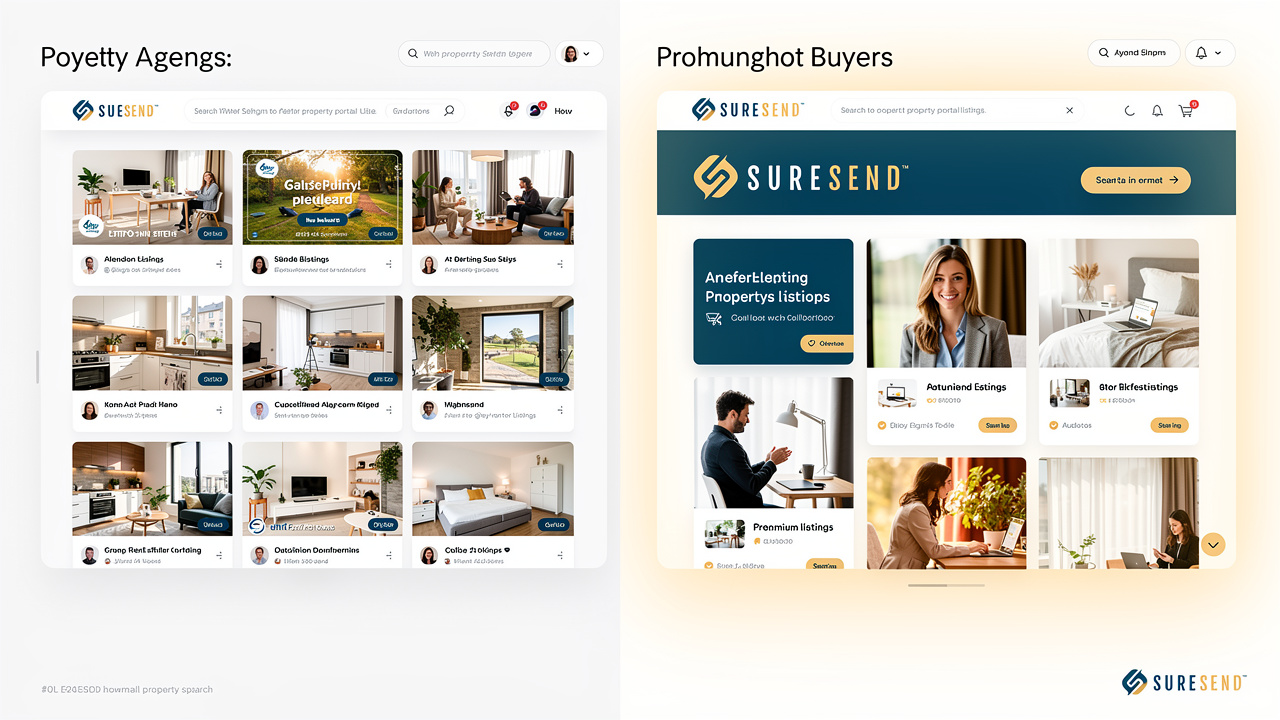
Buyers judge a real estate website against the portal-grade experience they already use on Zillow and Redfin, a habit reinforced by research showing a persistent B2B buying disconnect between what buyers expect from digital experiences and what most vendor sites actually deliver, regardless of which CRM model runs underneath it. They expect map search, saved searches, and instant alerts the moment a new listing matches their criteria, and none of that expectation changes based on how the backend was built.
A disconnected setup, where the website lives on one platform and the CRM lives on another, often shows up as a slower, more generic experience for the buyer. Alerts might lag by hours instead of minutes, and the branding on emails or texts can feel inconsistent with the polished site the buyer first visited. real estate CRM statistics that browsing properties online was the first step in the house-hunting process for 43% of buyers in 2024, which makes that first digital impression carry real weight.
When the search experience feels thin, buyers simply go back to the portal where they started, taking their behavioral data with them. A weak map search, limited filtering, or alerts that arrive a day late all push a buyer toward Zillow or Realtor.com instead of staying engaged on an agent’s own site. The agent loses not just a visit but the ongoing behavioral trail that would have shown exactly when that buyer was ready to talk.
Where Sure Send Fits: A Purpose-Built CRM With First-Party Search
Sure Send sits firmly in the third model, a purpose-built CRM connected to first-party home-search infrastructure rather than a bundle stitched together through a connector. It carries direct integrations with real estate portals, IDX providers such as IDX Broker, and other platforms including Sierra Interactive and Ylopo, plus its own proprietary search layer called Sure Send Connect, built on the same shared data foundation as ez Home Search, a consumer home search platform used by millions of visitors monthly. A customer’s contacts stay firewalled within their own account, never shared across other agents or unrelated accounts on the platform, which keeps the client relationship with the agent instead of a shared pool.
Sure Send Connect landing pages give agents branded home value pages, agent pages, open house pages, and neighborhood market pages, so buyers search under the agent’s own brand instead of a competing portal.
A built-in CMA builder and AVM let an agent generate a market analysis or home valuation without pulling data from a separate tool or waiting on a plugin to sync.
A first-party data layer tracks home values, mortgage balances, equity position, and ARM trigger dates, turning ordinary contact records into automation-ready profiles.
An Open API, webhooks, and Model Context Protocol support give teams a path to custom integrations without depending on a single connector that could break later.
For a closer look at how direct IDX integrations work across specific providers, our IDX integration guide covers that ground in more depth.
How This Differs From Connector-Based Setups
Because the platform’s integrations run at the API level rather than through middleware, lead and activity data sync in both directions automatically. Property views, saved searches, and equity or ARM triggers flow into the CRM in real time, powering AI lead scoring without a human having to notice the signal first.
One customer who previously ran a stack built around HubSpot plus several add-on tools to cover functionality gaps cut roughly $39,000 per year in CRM spend after consolidating onto Sure Send, while gaining deliverability and property-data triggers the old stack never had.
Which Model Fits Your Team Right Now?

The right CRM with IDX real estate website model depends on your lead volume, your team size, and how much time you have to manage disconnected tools, not on which platform has the longest feature list. A solo agent with a handful of leads a month faces a very different calculation than a team juggling five lead sources and a growing roster of agents.
| Team Type | What Matters Most | Fitting Model |
|---|---|---|
| Solo agent, low volume | Low cost, simple setup | Basic connector may be tolerable |
| Growing team, multiple lead sources | Two-way sync, automation triggers | All-in-one bundle or purpose-built CRM |
| Scaling brokerage | Data ownership, team-wide reporting | Purpose-built CRM with native integrations |
Solo agents just getting started may reasonably tolerate a basic connector setup if budget is tight and lead volume stays low, since the gaps in behavioral data matter less when there’s less volume to track in the first place.
Growing teams managing multiple lead sources need two-way sync and automation triggers, because manually checking a website dashboard for saved searches stops being realistic once a team is handling dozens of active buyers at once.
Brokerages scaling across agents need data ownership and reporting that rolls up across the whole team, which is exactly where a purpose-built CRM earns back its higher cost compared to a basic connector.
If You Already Have an IDX Website You Love
Choosing a better CRM doesn’t have to mean rebuilding a website you already trust. If your current IDX site performs well, a purpose-built CRM with direct integrations can usually connect to it, giving you the two-way data benefits without a site migration project.
For agents weighing IDX website providers directly, our separate guide covering those options in more depth is worth a look before committing to a new build. We recommend AgentFire and RealtyCandy, and we see incredible results when teams use these platforms alongside a CRM built for two-way data flow.
The Bottom Line
The CRM model behind your IDX CRM real estate setup matters more than which website brand sits on top of it. One-way connectors create blind spots that cost agents real buying signals, while direct integrations and first-party search keep data, automation, and client relationships under the agent’s own control instead of a portal’s.
Take the questions raised earlier back to your current stack and see how many honest answers you actually get. If the gaps add up, Sure Send is worth a look for teams ready to stop patching a disconnected system together.
Frequently Asked Questions
What Is The Difference Between IDX And A CRM?
IDX is the technology that displays MLS listings on a branded website, while a CRM is the system that manages contacts, communication, and follow-up after a buyer interacts with that site. They solve separate problems, and a strong setup needs both working together rather than treating one as a replacement for the other.
Can I Keep My Current IDX Website And Switch CRMs?
Yes, especially with CRMs that offer direct integrations to common IDX providers rather than relying only on a connector. Before switching, confirm whether the new CRM connects directly or through middleware, and ask what support exists for migrating your existing contact and activity history.
Do All IDX Integrations Update In Real Time?
No, refresh speed varies significantly by provider and by integration type. Connector-based setups often lag behind native, direct integrations because they depend on a third-party tool checking for updates on its own schedule rather than receiving data the instant it changes.
What Happens To My Leads If I Stop Using A Connector Tool Like Zapier?
If a connector tool like Zapier lapses or breaks, lead flow into the CRM can stop silently without any obvious warning. real estate CRM features avoid this single point of failure because the CRM and the website talk to each other directly, without a middleware subscription sitting in between.
Is A Purpose-Built Real Estate CRM Worth It For A Solo Agent?
It depends on lead volume and growth plans. A solo agent with low lead volume may start fine with simpler tools, but adding multiple lead sources or growing a team usually justifies the switch to a purpose-built CRM fairly quickly.
How Does Sure Send Keep My Client Data Separate From Other Agents?
Customer contacts remain firewalled within its own architecture, meaning one agent’s client relationships stay private even while the platform shares underlying infrastructure, like the ez Home Search data layer, across its customer base. No contact list is pooled or shared between unrelated accounts.

