


Dedicated IP vs Shared IP Email for Real Estate Agents: Choose Right
Your newest listing email lands in a prospect’s spam folder instead of their inbox, and that missed open could cost you a showing or a closing. Plenty of agents hear the fix is simple: get a dedicated IP. That advice skips the one question that actually matters, which is whether your sending volume and consistency can support one.
The real answer to dedicated IP vs shared IP email for real estate sending comes down to three things: how much mail you send, how steady that volume stays month to month, and who manages your sender reputation day to day. A dedicated IP gives you an email sending address used only by your business, while a shared IP pools your mail with other senders on the same infrastructure. Real estate teams should switch to a dedicated IP only once they consistently send high volume with mature monitoring in place, not before. This article walks through reputation control, warm-up time, cost, risk, and ongoing monitoring so you can make that call with real numbers instead of guesswork.
Read on to see exactly where your business falls on that spectrum.
Key Takeaways
A dedicated IP means your sender reputation stands alone; a shared IP pools your reputation with other senders on the same infrastructure.
Most individual agents and small teams send far below the volume a dedicated IP needs to stay healthy and trusted by inbox providers.
A well-managed shared pool often delivers better inbox placement than a poorly maintained dedicated IP.
Domain authentication (SPF, DKIM, DMARC) and clean contact lists matter more to deliverability than which IP model you pick.
Sure Send manages authentication and reputation for you, regardless of which IP model fits your current sending volume.
What Is a Dedicated IP and How Does It Work?

A dedicated IP is an email sending address used exclusively by your business, so every bit of its reputation comes from your own sending history alone. Nobody else’s campaigns run through that same address, which means your inbox provider decisions are based entirely on what you do, not on what other senders do. That isolation sounds appealing at first glance, since you control your own outcome without outside interference.
But the flip side is real too. You also carry full responsibility for every part of that reputation, with no other sender’s good behavior around to soften the impact of a bad week. For a solo agent running listing alerts and a loan officer sending rate updates sending rate updates, that responsibility is a bigger lift than it first appears, because reputation management becomes a standing job rather than a one-time setup task.
How Your Reputation Gets Built on a Dedicated IP
Gmail, Yahoo, and Outlook watch a sending IP’s history closely to decide whether a message belongs in the inbox or the spam folder. A brand new dedicated IP starts that process with zero history behind it, so inbox providers treat it with default suspicion until it proves itself. That proof takes time and consistent evidence of good behavior.
Every message you send from that point forward, whether it’s a thoughtful follow-up or a sloppy blast to an old list, shapes the reputation of that one address going forward. There’s no buffer from other senders absorbing the damage of a mistake. Inbox providers simply watch your own numbers and respond accordingly.
What Is a Shared IP and Who Manages It?
A shared IP pools your email sending with other users on the same address, typically grouped by similar business size and sending habits. Rather than building a reputation alone, you inherit part of the collective track record that pool has already earned with inbox providers like Gmail and Outlook.
The appeal here is straightforward: a pool with a long, clean sending history gives new or lower-volume senders instant credibility they could never build independently in the first few months. The responsibility for keeping that pool healthy, however, does not sit with you. Shared IP pools are also cheaper and can be a great place for many people to start, depending on your budget for investing in your business at this stage.
Your email provider is the one watching sending patterns, catching problem senders, and removing anyone whose practices threaten the group’s standing with major inbox providers, which is exactly why shared IP email deliverability depends so heavily on provider quality rather than your personal sending habits alone.
Why Pool Quality Matters More Than Pool Size
Not every shared pool carries the same level of risk, and that distinction gets lost in a lot of generic advice. A pool’s reputation is only as strong as its weakest sender, a point emphasized in the Messaging, Malware and Mobile Anti-Abuse Working Group’s best practices for sender reputation, since email service providers sending on behalf of many clients are exposed to whatever their worst-behaved client does.
Research on sender practices suggests roughly four in ten senders on shared pools skip basic list hygiene altogether, dragging down deliverability for everyone else nearby. A provider that actively vets new accounts and monitors ongoing behavior creates a meaningfully safer shared pool than one that lets anyone sign up and send without oversight.
Does Sending Volume Decide Which IP You Need?

Sending volume is the single biggest factor in this decision, and most deliverability professionals put the minimum viable threshold for a dedicated IP somewhere around 300,000 emails per month, a figure consistent with broader email marketing benchmarks that track open and click-through performance across sending volumes. Below that number, a dedicated IP has trouble generating the consistent sending history inbox providers need to trust it, which actually works against the very control it’s supposed to offer.
Most individual agents, and honestly most small real estate teams too, never come close to that volume even during a busy season. A team sending drip campaigns, listing alerts, and transaction updates to a few thousand contacts might hit a few thousand sends a month, which is nowhere near the scale that makes a dedicated sending IP realtor setup worthwhile. That gap between perceived need and actual volume is exactly where the “dedicated is always better” myth falls apart for most of the industry.
Why Low Volume Hurts a Dedicated IP

Without steady, consistent volume, inbox providers simply can’t accumulate enough sending history to decide whether your IP deserves trust. A thin trickle of mail doesn’t give Gmail or Outlook much to evaluate, which keeps the address stuck in a kind of ongoing probation.
Then there’s the opposite problem: a listing blast after three quiet weeks looks exactly like spammer behavior to automated filters, triggering exactly the suspicion a dedicated IP was supposed to avoid. Real estate’s natural rhythm, bursts of activity around new listings followed by quieter stretches, is a particularly poor fit for an infrastructure model built around steady, predictable volume.
What Does IP Warm-Up Involve, and Why Does It Matter for Agents?
IP warm-up is the gradual process of increasing email volume on a brand-new dedicated IP over several weeks or months until it earns enough sending history to be trusted at full capacity. You can’t simply plug in a new dedicated IP and fire off your entire contact list on day one, because inbox providers would flag that sudden surge as suspicious. Instead, you start with a small daily batch and increase it methodically, which means you’re operating at reduced sending capacity for a stretch of time right when speed matters most. For an agent trying to reach a hot lead the moment they request information, or a loan officer how often to follow up on a pre-approval inquiry, that delay works directly against the urgency speed-to-lead strategies depend on.
What Happens If You Skip or Rush Warm-Up
Pushing volume too fast during warm-up triggers spam filters before the IP has built any credibility at all, and that damage can be hard to undo. The address effectively starts its reputation in a hole instead of neutral ground.
Shared pools skip this problem entirely. Since you’re joining an infrastructure with an already-established, positive sending history, you can send at full volume from the very first campaign rather than waiting out a warm-up schedule.
How Do Cost and Risk Concentration Compare?
Dedicated IPs cost meaningfully more than shared options, and some providers require sign-off on high-volume certification programs, sometimes running around $12,000 per year, before they’ll even offer dedicated infrastructure. That price tag puts dedicated sending out of reach for most individual agents and smaller teams regardless of how appealing the control sounds on paper. Cost isn’t the only concentration risk worth weighing here, either. On a dedicated IP, a single mistake, a purchased list that bounces hard or a spam complaint spike from a poorly timed blast, lands squarely on your reputation with nothing to soften the blow. A shared pool spreads that same kind of error across the sending volume of every other business using that infrastructure, which gives you breathing room a dedicated setup simply doesn’t offer.
The Real Cost of a Reputation Mistake
Recovery timelines for damaged reputation are longer than most agents expect:
Moderate damage typically takes four to eight weeks to recover from.
Severe damage, like blocklisting, can take eight to twelve weeks or more before inbox placement returns to normal.
Professional remediation services for fixing a damaged sender reputation commonly run between $500 and $2,000 per month.
A full migration to a new email provider after a serious reputation collapse can exceed $50,000 in total cost.
Shared pools absorb individual mistakes across many senders at once, giving you time to correct course without that kind of instant financial fallout.
Why Does Domain Authentication Matter More Than IP Type?
Domain authentication, not IP type, increasingly decides whether your email reaches the inbox, since inbox providers now weigh your sending domain’s reputation alongside whichever IP you happen to use. As the industry shifts toward IPv6 adoption, Gmail, Yahoo, and other major providers are leaning harder on domain-level signals to judge whether a sender deserves trust. That shift matters enormously for the dedicated IP vs shared IP email real estate decision, because it means the control a dedicated IP promises matters less than it used to. SPF, DKIM, and DMARC are the three email authentication for agents that prove to inbox providers you’re really who you claim to be, and they matter the same amount whether you’re sending from a shared pool or a dedicated address. Getting those records configured correctly does more for your inbox placement than the IP decision itself.
What Drives Deliverability Beyond the IP Itself
List quality and engagement carry enormous weight here. Real estate carries a notably high bounce rate of 13.84%, according to Constant Contact’s industry benchmark data, often traced back to stale database segmentation that never get cleaned out as agents change roles or markets shift.
Complaint rates and how promptly you honor unsubscribe requests also factor heavily into how inbox providers score your domain. On top of that, sending consistently and relevantly, rather than in occasional unpredictable blasts, builds the kind of trust with inbox providers that no IP choice alone can replicate.
Which Model Fits Your Real Estate Business?
Most solo agents, small teams, and brokerages of modest size should default to a well-managed shared IP pool rather than chasing dedicated infrastructure they don’t yet need. The volume, budget, and process maturity required to make a dedicated IP worthwhile simply aren’t present for most of the industry, and forcing the decision early tends to backfire through longer warm-up delays and higher cost for no real deliverability gain. Dedicated infrastructure starts to make sense only once you’re sending consistently high volume, month after month, with the internal process and monitoring discipline to support it. A dedicated IP address real estate CRM platforms setup is worth evaluating seriously once your team has outgrown a shared pool’s capacity, not before, and the shift should follow actual sending data rather than a hunch that bigger infrastructure must mean better results.
Quick Decision Checklist
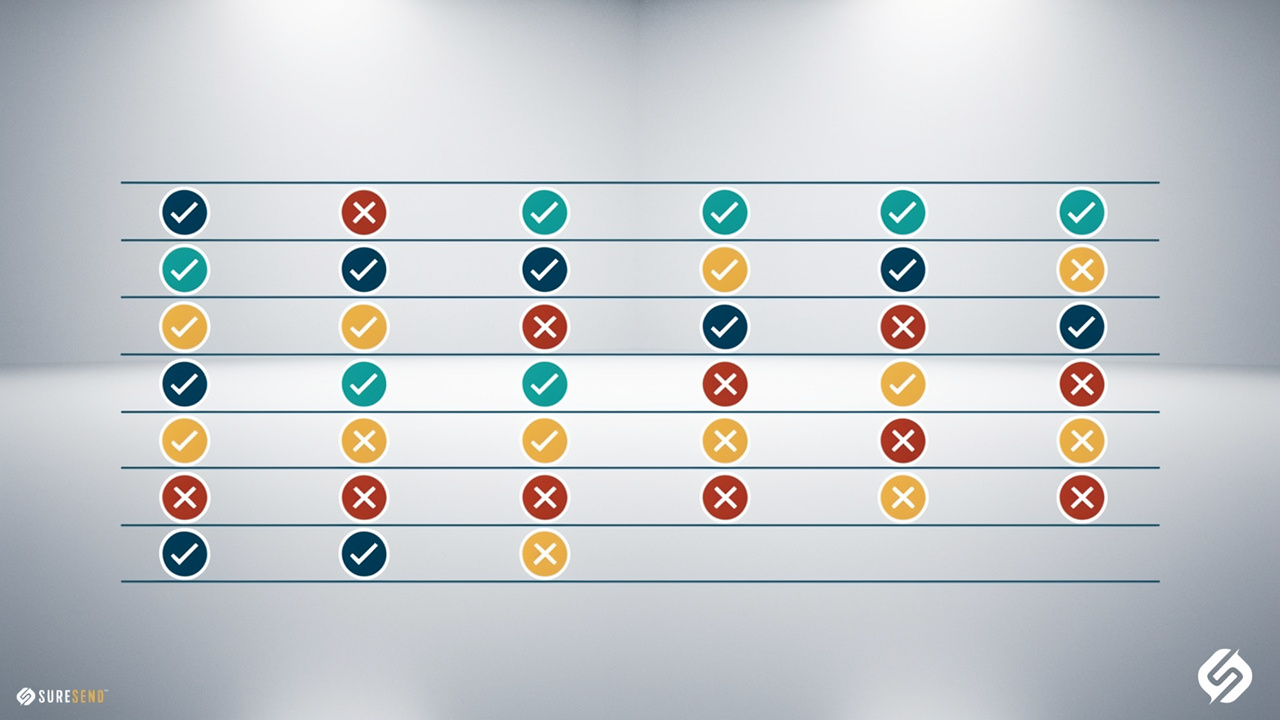
A fast gut-check can save you from an expensive, unnecessary switch. Here’s how the main factors typically map to each model.
| Factor | Points Toward Shared | Points Toward Dedicated |
|---|---|---|
| Monthly email volume | Under 300,000 | Consistently above 300,000 |
| Sending consistency | Irregular, listing-driven bursts | Steady, predictable volume |
| In-house deliverability expertise | Limited or none | Dedicated staff or vendor support |
| Budget | Cost-sensitive | Can absorb premium infrastructure pricing |
| Compliance needs | Standard real estate marketing | High-security B2B whitelisting requirements |
The one genuine exception worth flagging is high-security B2B sending or strict internal whitelisting, where a corporate recipient’s IT department requires a known, isolated sending address regardless of your overall volume.
How Sure Send Handles Reputation So You Don’t Have To
Sure Send runs its own proprietary email deliverability tools instead of reselling the same commodity third-party infrastructure that many CRMs quietly rebrand, and it offers both managed shared-IP pools and dedicated-IP options built into that same platform. That distinction matters because most CRMs on the market share a deliverability ceiling set by whatever generic infrastructure vendor they license, meaning price and promises don’t actually change what you get. Its team fully manages the DNS setup behind SPF, DKIM, and DMARC authentication on your behalf, and provides ongoing reputation monitoring so you’re never left troubleshooting a deliverability problem on your own. For agents and loan officers who’d rather spend their time on clients than on email infrastructure, that managed layer removes a technical burden most sales professionals never signed up to handle.
What This Means for Your Day-to-Day Sending
There’s no 300,000-per-month minimum or costly certification gate standing between an agent and genuinely strong sending practices here. Bulk and automated campaigns are priced per send, while one-to-one emails and texts carry no per-message charge at all, which keeps the cost structure aligned with how real estate teams actually communicate.
Carrier-registered texting and automatic suppression of bad phone numbers protect your sending identity across both email and SMS marketing strategies together.
Strong infrastructure and active management reduce risk and support good sending practices, but no provider, including Sure Send, can promise guaranteed inbox placement every time.
The Takeaway
Sending volume and consistency, not personal preference or the appeal of exclusivity, should decide whether your real estate business needs a dedicated IP or a shared one. For the vast majority of agents and teams, a well-managed shared pool delivers equal or better inbox placement at a fraction of the cost and without a warm-up delay working against your lead response time.
Authentication, list quality, and engagement patterns matter more than IP type for almost every real estate sender reading this. Take an honest look at your actual monthly volume before chasing dedicated infrastructure, and choose a provider like Sure Send that manages reputation on your behalf instead of leaving you to piece it together alone.
Frequently Asked Questions
Can I Switch From Shared to Dedicated IP Later if My Volume Grows?
Yes, most email providers support this transition once your sending volume and consistency justify it. Just plan for a warm-up period when you do make the switch, since a new dedicated IP starts with no sending history and needs time to build trust with inbox providers before running at full capacity.
Will a Dedicated IP Guarantee Better Inbox Placement Than a Shared One?
No, a poorly maintained dedicated IP can actually perform worse than a high-quality shared pool. Certified, well-managed senders on either model have reached inbox placement rates up to 99.8%, according to the 2025 email deliverability benchmark report, which shows management quality matters far more than whether your IP is shared or dedicated.
How Do I Know if My Real Estate Team’s Email Volume Qualifies for a Dedicated IP?
Add up every monthly send across your business, including prospect outreach, drip campaigns, listing alerts, and transaction updates. Then compare that total against the roughly 300,000 emails per month threshold most deliverability experts recommend as a realistic minimum before a dedicated IP makes practical sense.
Does Texting Reputation Work the Same Way as Email IP Reputation?
Not exactly. Texting reputation depends on carrier registration and a verified sending identity rather than shared or dedicated IP pools, and unregistered numbers get throttled or blocked by carriers in a way that mirrors what poor email IP reputation does to inbox placement.
What’s the Fastest Way to Check if My Current Sending Setup Is Hurting Deliverability?
Start with free tools like Google Postmaster Tools, which show domain and IP reputation signals directly from Gmail’s data. Beyond that, keep an eye on your bounce rate and spam complaint rate, since both are easy to track without technical expertise and serve as early warning signs of a developing problem.