


Independent Real Estate CRM: Own Your Database No Matter Where You Hang Your License
Should a real estate agent use their own CRM instead of the one their brokerage hands them? In most cases, yes, because an independent real estate CRM keeps your contact database and business history under your control no matter where you hang your license, while a brokerage-provided system can limit exports and sometimes cut off access the moment you give notice. That single difference, who actually owns your data, shapes nearly every other decision about which platform is worth your time.
The word “independent” gets used loosely in real estate software marketing, and that vagueness costs agents more than they realize.
There are actually two separate layers to check:
whether you personally own and can move your database, and
whether the company behind the software has its own interests tangled up with yours.
This article walks through both layers, names real acquisition history worth knowing about (Zillow and Follow Up Boss, Compass and Contactually), hands you a practical checklist, and shows where a founder-led, privately owned platform like Sure Send fits for agents who want full control of both.
Key Takeaways
Independence has two distinct levels: your own data ownership and the vendor’s structural independence from portals, lead sellers, or competing interests.
A brokerage CRM is a reasonable starting point for a new agent, but export limits are common and access can disappear the day you give notice.
Portal or brokerage ownership of a CRM company creates a built-in conflict of interest worth understanding before you commit your database.
Judge a CRM on risk reduction and long-term growth potential, not sticker price alone.
A written checklist lets you vet any CRM, current or prospective, before handing over years of client relationships.
What Does “Independent Real Estate CRM” Actually Mean?
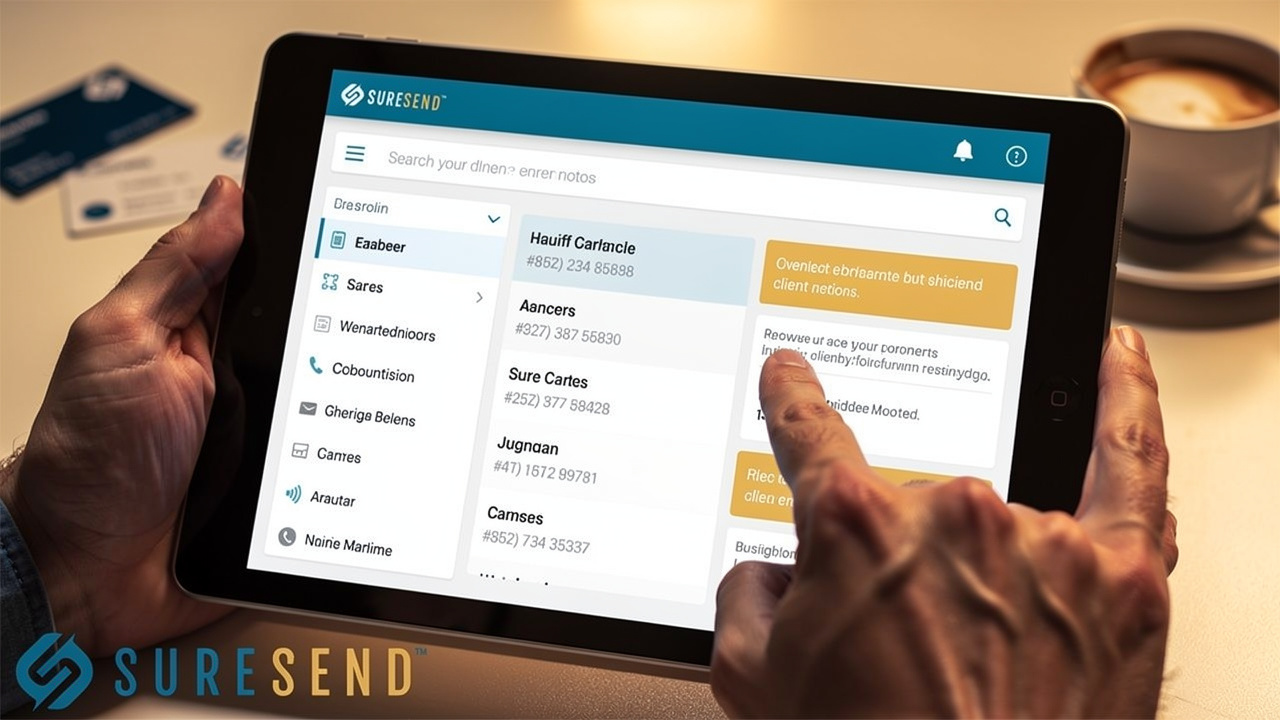
An independent real estate CRM means two separate things at once, and most agents only ever check one of them. The first layer is agent independence: a CRM and contact database that you personally own and keep, regardless of which brokerage or team you work under today or tomorrow.
The second layer is vendor independence, which asks a different question entirely. Who owns the company behind the software? Does that company sell leads or compete with you for the same buyers and sellers? Is your client data walled off from any sister business inside the same corporate family, or does it quietly feed products you had no say in? An agent can switch brokerages five times and still be using a CRM where the vendor itself has a financial interest in the same leads the agent is working. True independence requires both layers to check out, not just the one that shows up in a sales pitch about “owning your data.”
| Independence Level | What It Means | What to Check |
|---|---|---|
| Agent-Level | You own and can export your database no matter who you work for | Export rights, contract language, brokerage lock-in clauses |
| Vendor-Level | The CRM company itself has no competing interest in your leads | Company ownership, lead-selling practices, data firewalls |
Why Both Levels Matter, Not Just One
A CRM can pass the agent-ownership test and still fail the vendor-independence test, and that gap is where most of the real risk hides. Picture a platform that lets you export your contacts cleanly, which feels like a win, while the company that built it is owned by a portal that also sells leads to your competitors using data patterns pulled from accounts just like yours. The export button satisfies the first question but says nothing about the second.
This is exactly why sales managers, solo agents, and loan officers alike need to run both checks, not just the comfortable one. Asking “can I get my data out” is necessary but not sufficient. The harder, more useful question is “does the company holding my data have a reason to use it against my business interests,” and that question deserves just as much attention before you sign anything.
The Brokerage CRM Trade-Off: Good Start, Hidden Cost
A brokerage-provided CRM is a genuinely smart, cost-effective choice for a brand-new agent with a thin contact list and a tight budget, and there is no shame in starting there. Most brokerages roll the CRM cost into your split or offer it free, which removes a line item while you are still building a book of business. The platform usually comes with training, built-in lead sources, and a support desk that answers the phone, all of which matter when you are learning the job. The trade-off shows up later, not on day one. Many guide to CRM for brokers limit how much data you can export, restrict the format you can pull it in, or simply were never built with the assumption that an agent might one day want to leave. The contract you signed when you joined often says the brokerage owns the contact data outright, meaning the relationships you built through your own hustle may legally belong to someone else.
What Happens the Day You Give Notice

The moment you tell your broker you are leaving, your CRM access can be cut off that same afternoon, and for many agents this is the first time the ownership question becomes real. Locked out of the system means locked out of your notes, your deal history, your buyer preferences, and every detail you logged about who is ready to act and who needs another six months. It is not just inconvenient; it functions as losing your own client file cabinet overnight.
This is why your two most valuable business assets as an agent are your personal brand and your real estate database software, everything you know about those contacts. If a platform change can strip you of the second one instantly, the business you thought you were building was never fully yours to begin with. Reframing the database as the actual business asset, rather than the brokerage relationship, changes how seriously you take the ownership question from day one.
Why Portal and Brokerage Ownership of Your CRM Is a Conflict of Interest
Portal or brokerage ownership of a real estate CRM creates a structural conflict of interest because the company holding your client data can also profit from competing against you for those same consumers. This is not a hypothetical scenario built to scare agents into switching software.
Zillow has owned Follow Up Boss since December 2023, folding a widely used independent CRM into a company whose core business is selling leads and advertising placement to agents, often the very agents using that CRM.
Compass acquired Contactually back in 2019, bringing another popular CRM under the roof of a brokerage that competes directly with independent agents and teams in the same markets.
Neither acquisition means the CRM stopped working well, and neither company has been accused of misusing client data. When the entity that owns your software also earns revenue from lead generation or brokerage recruiting, the incentive to keep your data walled off from those business lines depends entirely on internal policy, not on any guarantee built into the product itself. A founder-led or privately held CRM without that dual interest simply does not face the same CRM platform risk, because there is no competing business line for the data to quietly serve.
What Agents and Industry Voices Are Saying
Agent discussion boards and brokerage Facebook groups have carried a steady undercurrent of concern since these deals closed, centered less on functionality and more on who benefits from the ownership change. The recurring worry is not that Zillow or Compass will misuse specific agent accounts, but that a portal’s long-term financial incentive and an individual agent’s long-term financial incentive are not the same thing, and a CRM sitting between the two will eventually have to choose a side.
It is worth being careful here: this is a concern about structural incentive, not an accusation of wrongdoing against either company. Both platforms continue to serve large numbers of agents well. The fair takeaway is that any agent evaluating a CRM owned by a portal or a competing brokerage should ask pointed questions about data separation before assuming the arrangement works entirely in their favor.
The Independent Real Estate CRM Checklist: What to Verify Before You Commit
Before you hand a CRM years of client relationships, run it through a short, specific checklist rather than trusting a sales demo or a glossy feature list. The goal is judging the platform on risk reduction and return on investment, not on CRM pricing comparison, because a cheap or free CRM that locks your data in costs far more over a ten-year career than a slightly pricier one that lets you leave cleanly whenever you choose. The checklist below splits into two groups: questions about who owns and can export your data, and questions about who owns the vendor and who else might touch your account.
Questions to Ask About Data Ownership and Export
Start by confirming, in the terms of service, exactly what you can take with you and under what conditions. Contracts often bury the real answer in language that sounds generous but functions narrowly once you actually try to leave.
Can you export all contacts, notes, call logs, and deal history in a standard, usable format at any time, without needing sign-off from your broker first?
Does the contract specify in plain language who legally owns the data, you, the brokerage, or the software vendor, rather than leaving it ambiguous?
Does exporting strip out your notes and history, leaving you with bare contact names and phone numbers instead of the full relationship record you built?
For a deeper look at how ownership clauses typically get written and what to watch for, Sure Send’s guide on real estate CRM data ownership and its breakdown of CRM platform risk in real estate both walk through the fine print most agents skip.
Questions to Ask About Vendor Independence and Access
The second set of questions shifts away from your contract and toward the company itself, since ownership structure determines whether your interests and the vendor’s interests actually line up.
Does the company that owns the CRM also generate revenue from selling leads, running a competing brokerage, or placing ads that put it in competition with its own customers?
Is your account firewalled from any sister company or affiliated business, or could your activity data quietly inform products you never agreed to?
Can you grant a coach, assistant, or transaction coordinator CRM data independence to help you without exposing commission figures or private notes? Even if you can, does that cost you extra, as most CRMs will charge you for an extra seat?
The overview of CRM data independence covers how ownership structure and helper access should work together, and it is a useful second check once the export questions above are settled.
How Does a Founder-Led CRM Like Sure Send Differ From Portal-Owned Platforms?
A founder-led CRM like Sure Send differs from portal-owned platforms because it is privately owned and operated independently, with no competing lead product or brokerage business that would give it a reason to treat your data as anything but yours. Sure Send does not sell leads to your competitors, does not share customer records with an affiliated portal, and keeps customer data firewalled from every other interest in its broader business family. Agents can automatically download your CRM data, notes, and deal history in standard formats whenever they want, and the company offers dedicated support for agents moving between brokerages rather than treating that moment as a reason to make access harder. Where portal-owned CRMs inherit a parent company’s incentives the day of an acquisition, a founder-led platform answers to the agents and brokers using it, because that is where its business actually comes from.
What Owning Your Database Actually Looks Like Day to Day
Ownership in practice is less about a legal clause and more about what the software does for you every morning. Sure Send’s Win the Day system and Smart Lists organize daily activity inside a database the agent controls, surfacing exactly who needs a call today without routing that priority through any brokerage-level gatekeeper.
Role-based permissions let an agent extend limited, read-only access to a coach or virtual assistant without handing over commission data or full account control, which answers the helper-access question from the checklist above directly. CRM IDX integration guide with platforms like Sierra Interactive, Ylopo, and IDX Broker also keep property and listing data flowing without relying on fragile middleware connectors that break quietly when one side updates its software. That is some of what makes them solid offerings for agents.
Can an Independent CRM Actually Grow With Your Business?
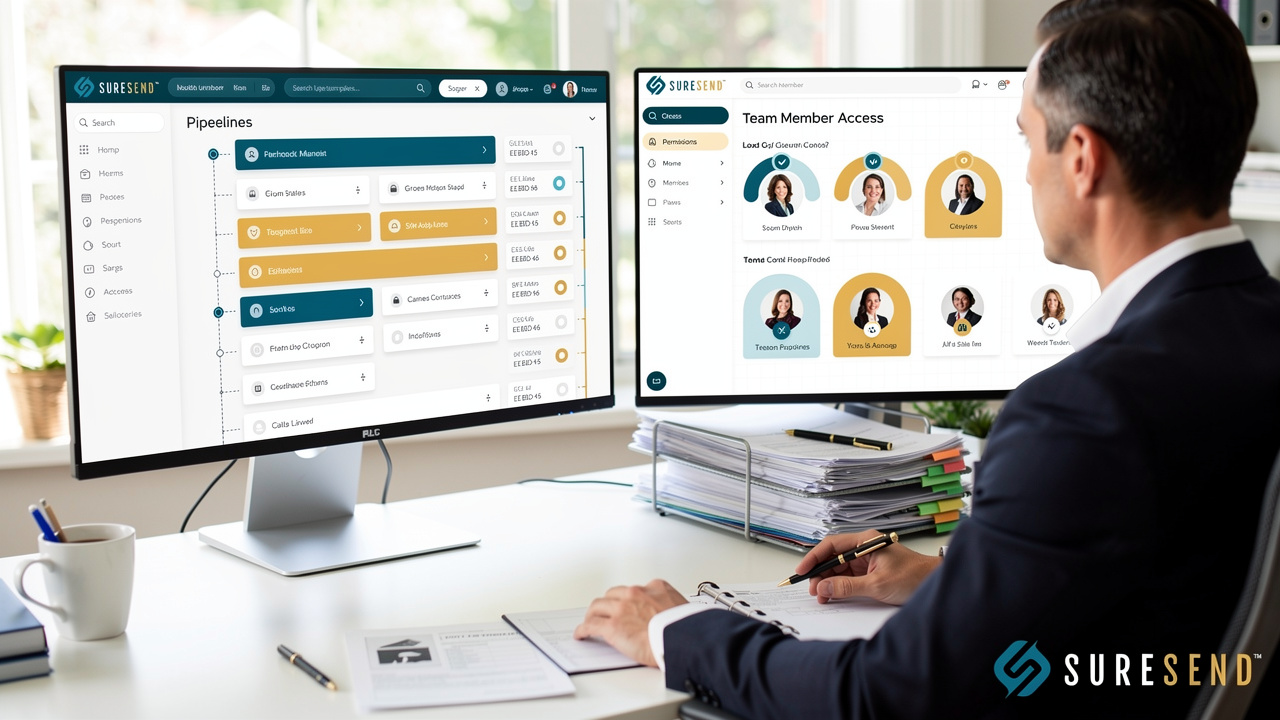
An independent CRM can grow with your business without forcing a painful platform switch later, provided it was built to scale from the start rather than bolted together for solo agents only. The concern among agents weighing independence is understandable: will the simple system that works for one person today still make sense once there is a buyer’s agent, a transaction coordinator, and a second office involved? A platform built around a single unified database, rather than a one-size-fits-all solo tool, can add role permissions, sub-team views, and coaching access as those needs appear, instead of requiring a migration project down the road. Sure Send, for example, supports multiple pipelines by client type and office location while keeping one combined contact database underneath, so multi-location real estate teams sees unified reporting without losing the local flavor each office needs.
Solo Agent to Team: What Changes and What Doesn’t
What changes as a solo agent builds a team should be mostly additive rather than disruptive. Role permissions, sub-team pipeline views, and external coach access appear only when the agent actually needs them, instead of cluttering the experience for someone still working solo.
What does not change is the foundation underneath all of it. The contact database, the notes on every client, and the full deal history carry forward unchanged through every stage of growth, from one person at a kitchen table to a multi-agent team with its own office manager.
What Independence Means for Follow-Up, Referrals, and Repeat Business
Database independence matters financially because repeat and referral business, not new leads, is where most agent income actually comes from over a career. Industry research on client retention has long shown a wide gap between how many buyers say they would use their agent again and how many actually do, often cited at roughly three in four saying yes while only around one in eight follow through. That gap is rarely a lead-generation problem; it is a follow-up systems problem, and it shows up most clearly in real estate database reactivation.
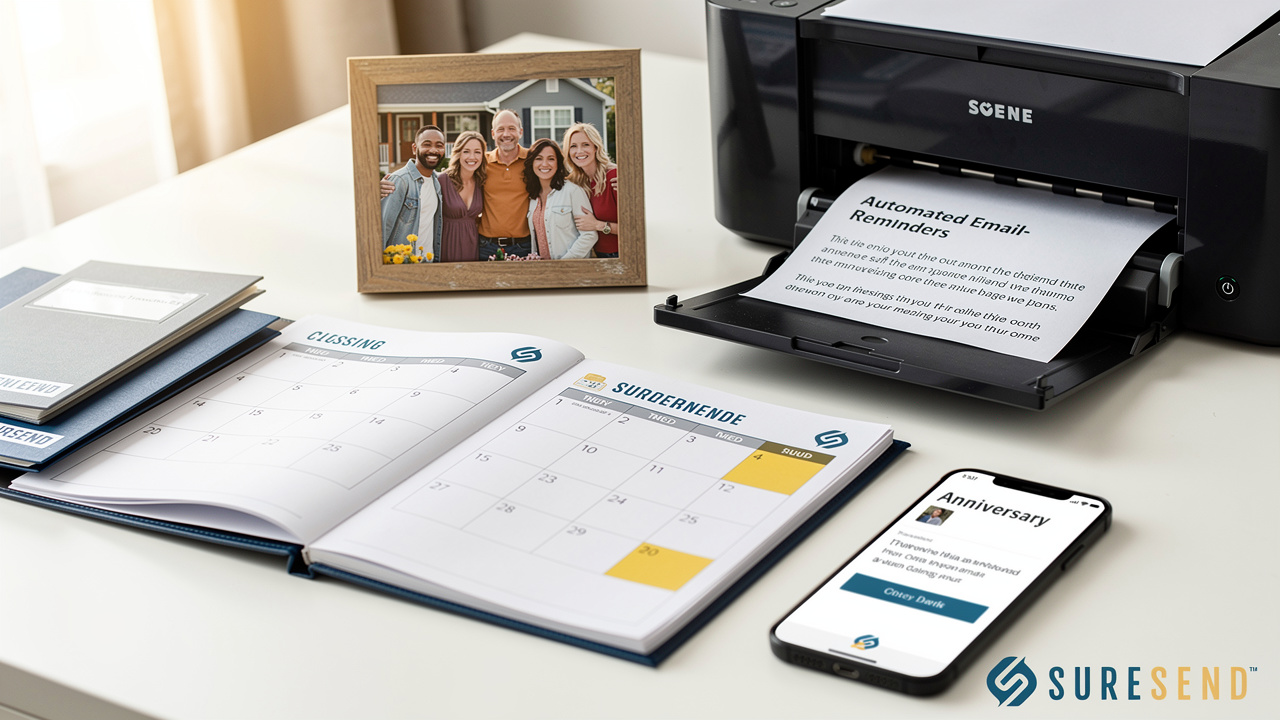
Owning your database means owning the automation built on top of it, including:
Anniversary check-ins sent automatically on the purchase date each year
Equity alert triggers when a past client’s home value shifts significantly
Scheduled referral requests that go out whether or not the agent remembers to send them manually
A CRM you control lets you build these sequences once and trust they keep running, instead of hoping memory and good intentions carry a relationship across five or ten years.
A locked or lost database does not just cost you contact names and phone numbers. It costs the referral pipeline built from years of closings, thank-you notes, and small favors that never got formally tracked anywhere else. When that history sits inside a system a brokerage controls, leaving the brokerage can mean leaving years of earned trust behind with it.
This is the financial argument for independence that sticker price alone never captures. A CRM that costs a little more but keeps your referral engine running for a decade is worth more than one that saves a few dollars a month while quietly putting that same engine at risk.
The Takeaway
Independence in a real estate CRM is really two separate questions wearing one label, and both need a clear answer before you trust a platform with your business. Ask whether you personally own and can export your database no matter where you work, and separately ask whether the company behind the software has a financial interest that competes with your own. Run any CRM you currently use, or are considering, through the checklist in this article rather than taking a sales pitch at its word.
Sure Send was built around answering both questions the same way: privately owned, broker-agnostic, and structured so agents keep full control of the database they spend a career building. Whichever platform you choose, treat that decision as a business continuity choice, not just a software purchase.
Frequently Asked Questions
Is a Brokerage-Provided CRM Ever a Smart Choice?
Yes, a brokerage CRM can be a smart, cost-effective choice for a brand-new agent with few contacts and a tight budget. The trade-off is real, though, so confirm your export rights and access terms in writing before relying on it as your long-term system, especially once your database starts to have real value.
What’s the Difference Between a Non-Zillow CRM and an Independent CRM?
A non-Zillow CRM simply avoids one specific portal’s ownership, while an independent CRM is a broader standard covering any vendor or brokerage affiliation that could create a conflict of interest. A CRM can technically be non-Zillow and still fail the independence test if a different portal or brokerage owns it instead.
Can I Take My CRM Data With Me if My Brokerage Shuts Down or Gets Acquired?
Whether you can take your data with you depends entirely on whether the CRM is agent-owned or brokerage-owned under your contract, as well as the terms of service. Check the vendor’s disaster-recovery practices and export options now, before an acquisition or shutdown forces the question, since that is the real deciding factor in how much access you keep.
How Do I Give My Coach or Assistant Access Without Losing Control of My Data?
Look for a CRM offering role-based, read-only, or otherwise limited permission levels rather than full account access. Sure Send’s external coach access and role-based permissions are built for exactly this, letting a coach or assistant see what they need without exposing commission figures or private notes.
Does Switching to an Independent CRM Mean I Lose MLS or IDX Data?
No, switching to an independent CRM does not require giving up MLS or IDX data. Native integrations with IDX and MLS platforms can run independently of any brokerage-owned CRM, which is different from a middleware-dependent connection that can break quietly when one side updates its system.
How Much Does an Independent Real Estate CRM Typically Cost?
Pricing varies widely across independent real estate CRM platforms, so compare total cost against consolidated features rather than the monthly fee alone. Stacking separate marketing, e-signature, and website subscriptions on top of a cheap CRM often costs more than one platform with everything built in, so weigh risk reduction and return, not price alone.

Written by