


AI CRM Real Estate Solutions That Actually Drive Sales Results
Most real estate agents already know AI is supposed to help them sell more homes. The real question is whether their CRM’s AI actually does anything, or if it just adds a chatbot on top of the same clunky system they were already ignoring. The best AI CRM real estate agents actually use is the one where AI executes tasks inside the platform’s core, not one bolted on as an afterthought.
Agents juggle leads, calls, texts, and follow-ups across scattered apps every single day. Add a weak AI layer on top of that mess, and you’ve just added another screen to check instead of solving the problem. This article walks through what AI built into a CRM’s foundation does differently at each stage of an agent’s day, from the second a lead arrives to the months-later nurture touch that brings a past client back for a referral. We’ll also cover what separates AI grounded in your own numbers from generic, industry-average guesses, and what questions to ask before you commit your team to a new platform.
By the end, you’ll have a clear framework for judging any real estate AI CRM on what it actually does, not just what its sales page promises.
Key Takeaways
Built-in AI changes outcomes because it acts inside the workflow; bolted-on AI mostly just suggests things from the sidelines.
AI trained on your own conversion history produces sharper recommendations than AI built on generic industry averages.
There are five stages where AI touches an agent’s day: lead intake, prioritization, call prep, follow-up, and long-term nurture.
Before choosing a platform, test how its AI handles a real lead, call, and follow-up cycle, not just a demo script.
What Does “AI CRM” Actually Mean For Real Estate Agents?
An AI CRM for real estate is a platform that uses artificial intelligence to act on client data, not just store it. That distinction matters because the term “AI CRM” gets slapped on almost every product in the market right now, even ones that added a basic chatbot last quarter and called it done. A real AI-powered CRM that real estate teams can depend on does things a plain database never could: it scores leads automatically, enriches contact records with fresh property data, and recommends or even executes the next step without someone opening a spreadsheet to figure out who’s overdue for a call.
This matters even more given findings that hidden buyer behavior is now stalling 40% of B2B deals, confirming that old-school, manually-driven sales and marketing playbooks no longer hold up, which is why the deeper distinction this article is built around is whether AI is native to the platform’s architecture or bolted onto an older system after the fact. A CRM with AI that real estate agents trust tends to have intelligence woven through every layer, meaning the dialer, the inbox, the contact record, and the pipeline all pull from the same brain. Bolted-on AI usually lives in a separate module, pulling stale data and requiring a human to copy its suggestions into the actual workflow by hand.
This gap shows up constantly in daily use, even if the sales demo looks identical on the surface. A later section of this article covers the built-in versus bolted-on comparison in more depth, but for now, the key takeaway is simple. If the AI can’t act directly inside your pipeline, contact record, and messaging tools, it’s just another report to read, not a system that changes what happens next.
How Built-In AI Handles New Leads The Moment They Arrive
Built-in AI handles a new lead by tagging, AI lead scoring, and routing it automatically, the instant it enters the system, without a human touching the record first. This matters because speed to first contact is one of the clearest predictors of who wins a real estate lead. A buyer who fills out a form on three different websites at 9 PM is going to work with whichever agent responds first, not whichever agent happens to check their CRM next.
When AI lives at the core of a platform’s architecture, the moment a lead’s information hits the system, it gets classified by source, scored against engagement signals, and routed to the right agent or team member, all before anyone logs in that morning. Contrast that with bolted-on systems, where a lead from a third-party site might sit in an inbox, get manually copied into a spreadsheet, then eventually get keyed into the CRM hours later.
Each one of those manual steps is a point where a lead goes cold, gets forgotten, or gets claimed by a competing agent who happened to respond faster. The architecture question isn’t academic here. It’s the difference between a lead that’s actionable in under a minute and one that’s actionable whenever someone remembers to check a different tab.
Why Lead Response Speed Still Decides Who Wins The Deal

Real estate buyers rarely wait around for a callback, and the agent who responds first often real estate lead conversion rate regardless of experience or marketing spend. This first-mover dynamic has held steady for years because buying a home is an emotional, time-sensitive decision, and prospects simply move on to the next name on their list if nobody answers.
Sure Send addresses this directly through its rapid lead intake process. Leads that come in through API connections or email parsing become actionable within 60 seconds, complete with automatic source tagging so agents immediately know where the inquiry originated. The system also fires instant team notifications, meaning the right person finds out about a hot lead before that prospect has time to reach out to anyone else.
How AI Decides Who An Agent Should Call Next
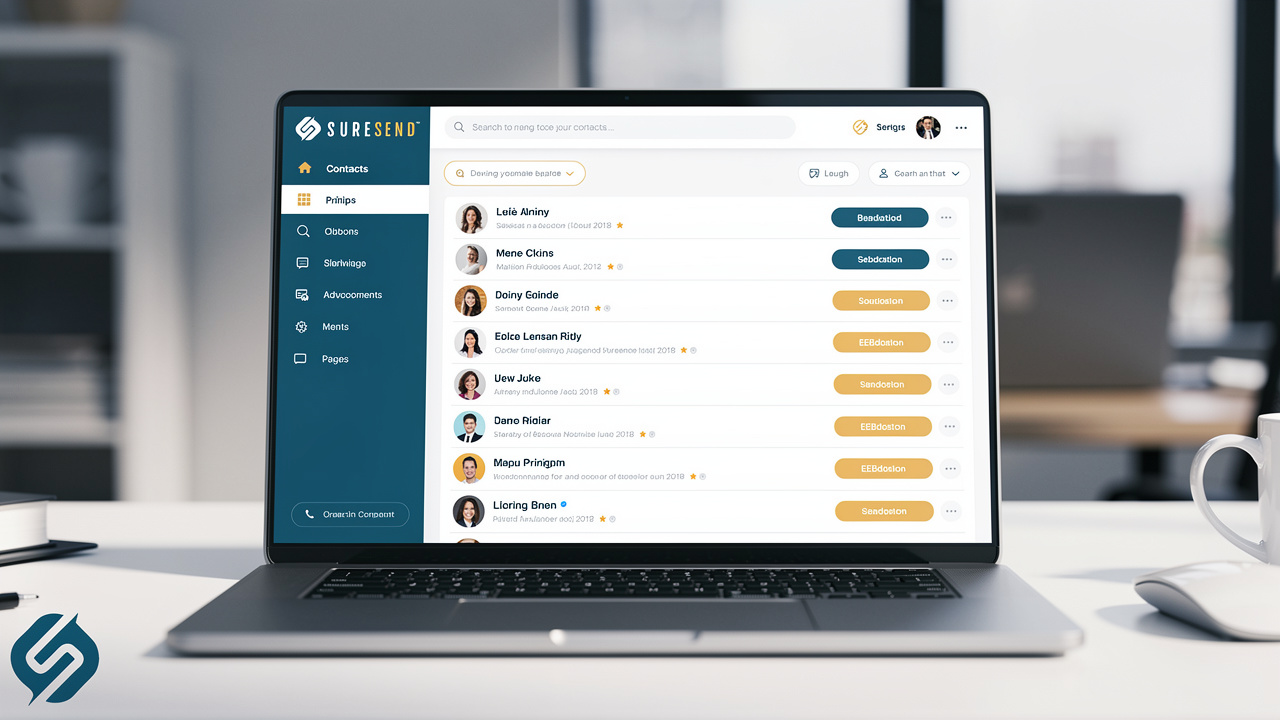
AI decides who to call next by ranking contacts according to engagement signals, pipeline stage, and how long it’s been since the last touch, an approach that echoes new research on contact-level ABM strategy showing that generic, account-wide prioritization misses the individual signals that actually predict who’s ready to engage. This solves a problem every busy agent runs into eventually, often called decision fatigue, where a list of 200 or 2,000 contacts becomes so overwhelming that reps default to calling the same five people they already know well, while dozens of warmer leads go untouched for weeks.
A CRM with AI built into its foundation removes that guesswork by ranking contacts automatically with built-in lead nurturing tools, pulling from website activity, email opens, text replies, and how far along each contact is in the buying or selling process. Instead of an agent opening the CRM and staring at an undifferentiated wall of names, they see a ranked list that reflects who actually needs attention today.
This is where foundational AI earns its keep, because the ranking updates continuously as new signals arrive, rather than sitting static until someone manually re-sorts a spreadsheet. The result is an agent who spends their limited calling time where it actually moves deals forward, instead of burning the morning on contacts who were never going to answer anyway.
Sure Send’s Take Action And Win The Day Approach
Sure Send’s Take Action automation surfaces overdue, high-priority contacts directly inside the rep’s daily dashboard, so there’s no hunting through old notes or guessing who’s gone quiet too long. If someone hasn’t been reached within a defined window, that contact rises automatically to the top of the queue.
The Win the Day view works alongside that as a sales performance dashboards, showing exactly who to contact and how progress stacks up against personal and team goals. It removes the guesswork that normally eats up the real estate agent daily schedule morning, turning “who should I call” into a question the system already answered before the agent logged in.
How AI Prepares An Agent Before A Call

AI prepares an agent for a call by automatically pulling together a summary of that contact’s full history, so the agent walks in already knowing the context instead of scrambling to remember it. This matters more than it sounds, because a client who feels like their agent forgot a previous conversation loses confidence fast, even if the agent is genuinely busy rather than careless.
Platforms with AI built into their core architecture generate these pre-call summaries from every touchpoint available, including calls from the built-in dialer, email threads, text exchanges, and property activity like which listings a contact has viewed recently. An agent opens the contact record thirty seconds before dialing and sees exactly where things left off, what the client cares about, and what to bring up next.
Bolted-on AI tools usually can’t deliver this kind of depth, because the data they’d need lives in disconnected modules that were never designed to talk to each other. A chatbot layered onto an old CRM might summarize the last email, but it has no access to the text thread stored in a separate messaging tool, or the showing history tracked in yet another system. That fragmentation means the agent still has to do the digging manually, which defeats the entire purpose of having AI in the first place. The quality of a pre-call summary is really a test of how unified a platform’s data actually is underneath the surface.
What Happens After The Call: AI-Driven Follow-Up
AI-driven follow-up logs the call, updates the pipeline stage, and follow-up email app automatically, all without the agent re-entering anything by hand. This is exactly where most manual CRMs quietly fail, because follow-up only happens if the agent remembers to do it, and busy agents forget constantly, not out of laziness but because they’re juggling showings, paperwork, and a dozen other conversations at once.
Foundational AI closes that gap by treating the end of a call as a trigger point rather than the end of a task. The moment a call wraps, the system can log notes, move the contact to the appropriate pipeline stage based on what was discussed, and queue up the next email, text, or reminder, all automatically.
This matters because the numbers on how often to follow up are stark. According to NAR’s 2024 Profile of Home Buyers and Sellers, a large majority of past clients say they’d rehire their agent, yet only a small fraction actually do. That gap has nothing to do with client satisfaction and everything to do with follow-up discipline that depends entirely on human memory. A CRM where AI handles that step structurally, rather than leaving it to an agent’s to-do list, closes that gap before it ever opens.
Multi-Channel Sequences That Run Without Manual Work
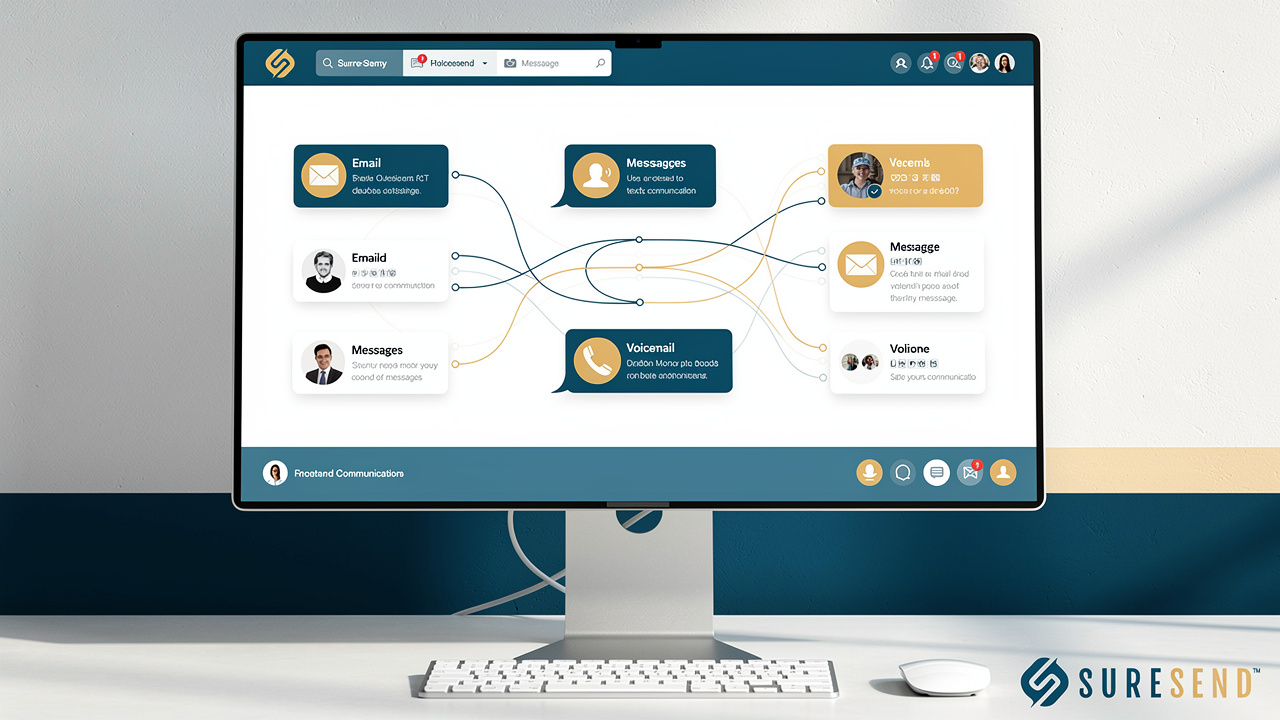
Sure Send’s automation deploys email drips, real estate SMS marketing, and voicemail drops through natural language commands, meaning an agent can type a plain request and have a working sequence live in minutes rather than hours. There’s no need to build each step manually inside a clunky campaign builder.
Real estate-specific sequences come best email marketing for agents, including:
A new lead welcome series
Updates for active buyers and sellers moving through a transaction
Periodic touches for past clients and sphere-of-influence contacts
Each sequence runs in the background, keeping every contact warm without the agent lifting a finger after the initial setup.
Why AI Based On Your Own Numbers Beats Industry Averages
AI grounded in an individual agent’s own conversion history produces sharper, more trustworthy recommendations than AI built on generic industry benchmarks. Industry-average lead scores assume every agent converts referrals, open house visitors, and online leads at roughly the same rate, which almost never reflects reality. One agent might close 40% of their sphere-of-influence contacts but struggle with cold internet leads, while another thrives on Zillow leads but rarely converts referrals. A generic score treats both agents identically, which means the recommendations it generates are, at best, a rough average that fits neither one particularly well.
AI that’s grounded in a rep’s actual contact data and historical conversion pattern solves this by learning what “high-probability” genuinely means for that specific person, not for the market as a whole. This distinction becomes especially important when comparing the best AI CRM options for real estate agents, because the platforms that lean on broad, generic benchmarks will always lag behind ones that personalize scoring around the person actually doing the selling. When the AI reflects an agent’s real strengths and patterns, the recommendations feel earned rather than arbitrary, and agents are far more likely to trust and act on them consistently.
Turning Activity Into A Dollar Value

Sure Send’s Winning Formula calculates a six-month rolling average of each rep’s own conversion ratios, then assigns a specific dollar value to every call and conversation based on that personal history. Instead of a vague activity count, the agent sees a number tied directly to what their actual work has historically produced.
When reps see proof that a certain type of call or follow-up genuinely pays off for them personally, they build habits around what’s proven to work, rather than chasing generic best practices that might not fit their market, their lead sources, or their style.
How AI Keeps A Database Warm Between Transactions
AI real estate database reactivation by automatically flagging life events, property changes, and sphere-of-influence milestones that give an agent a natural, timely reason to reach out. This matters because top-producing agents generate the majority of their income from repeat and referral business, not from constantly chasing brand-new leads, and a database that goes cold between transactions quietly drains that future revenue. Systems built with AI at their foundation track things like birthdays, home purchase anniversaries, and shifts in a contact’s property or financial situation, then prompt outreach automatically instead of relying on an agent to remember a date from three years ago.
database segmentation works alongside this by grouping past clients and personal contacts so market updates, newsletters, and seasonal touches go out consistently without manual list-building every time. Market update automation adds another layer, sending neighborhood reports or property alerts on a schedule so an agent’s name keeps showing up in someone’s inbox long after closing day. None of this requires the agent to sit down and plan outreach campaigns months in advance. It happens in the background, which is exactly why it actually gets done, rather than becoming another good intention that never survives a busy listing season.
What To Look For When Choosing An AI CRM For Your Team
Choosing the right AI CRM comes down to figuring out whether its intelligence actually executes work or just makes suggestions someone still has to carry out manually. The practical test is to ask pointed questions during a demo or trial, rather than taking a sales pitch at face value, because almost every vendor will claim their product is “AI-powered” regardless of how deep that actually goes.
Start by asking whether the AI is native to the platform’s architecture from day one, or whether it was added to an older system later, since that history tends to explain a lot about how well different features talk to each other. Ask directly whether the AI executes actions, such as moving a deal forward or sending a follow-up, or whether it simply tells the agent what it thinks they should do next. Then ask whether lead scoring and recommendations are based on that specific team’s own conversion data, or pulled from generic industry benchmarks that may not reflect how that particular brokerage actually sells.
Beyond those core questions, a few practical differentiators tend to separate platforms that get adopted from ones that get abandoned within a few months.
Adoption speed matters more than feature count. A platform loaded with hundreds of features nobody uses is worse than a focused one agents actually open every day. Ask how long it realistically takes a new team to become productive, not just how long the sales demo lasts.
email deliverability best practices is a hidden differentiator most buyers skip. CRMs that rely entirely on third-party email infrastructure have no real path to fix deliverability problems when they show up, which matters a lot for an agent sending regular market updates.
Integration depth separates CRM IDX integration guide from fragile middleware. A platform with genuine native integrations to MLS feeds, transaction tools, and IDX providers stays reliable through platform updates, while middleware-dependent connections tend to break at the worst possible moment.
Questions That Reveal Built-In vs. Bolted-On AI
A short, direct checklist can cut through most marketing language faster than a full product tour. Bring these three questions into any vendor conversation and pay close attention to how specifically they’re answered.
“Does the AI move deals and send follow-ups on its own, or does it just tell me what to do and leave the work to me?”
“Is my lead scoring based on my own team’s conversion history, or is it built from industry averages that don’t reflect how we actually sell?”
“Can my team be productive within days, or does this realistically require months of setup and configuration before we see any value?”
The Takeaway
The real differentiator in any AI CRM for realtors isn’t the length of the feature list, it’s whether AI is foundational to the architecture or added on top as an afterthought. That foundation determines whether the system actually changes what an agent does each day, from how fast a lead gets a first response to whether a past client gets a timely nudge before a referral slips away to someone else.
Before committing a team or a brokerage to any platform, watch it work through a real lead, a real call, and a real follow-up sequence rather than relying on a scripted demo. If the AI can’t execute that cycle on its own, with recommendations grounded in actual conversion data rather than generic averages, it’s not going to change behavior once the novelty wears off.
Frequently Asked Questions
Do I Need A Real Estate-Specific AI CRM, Or Can A General-Purpose CRM Work?
A general-purpose CRM can work, but it usually requires heavy configuration before it understands real estate patterns like life events, sphere-of-influence segmentation, or property-change triggers. Real estate-native platforms come with pre-built sequences and property data already in place, so teams spend less time building workflows from scratch.
How Long Does It Take To Get A Team Productive On A New AI CRM?
Enterprise-style platforms often require months of setup before a team sees real value, while platforms built for fast adoption can get agents productive within days. Clean contact data and clearly defined follow-up workflows going in significantly shorten that timeline either way.
Will AI Replace The Personal Relationship Part Of Real Estate Sales?
No, AI handles repetitive admin work and timing decisions, not the relationship itself. By automating data entry, scheduling, and routine follow-up, AI actually frees up more of an agent’s time for genuine, unscripted client conversations rather than replacing them.
Can AI CRMs Integrate With The MLS And Tools I Already Use?
Most AI CRMs connect through either native integrations or middleware like Zapier, and native connections tend to stay reliable through platform updates while middleware can break unexpectedly. Sure Send, for example, offers native integrations with IDX providers and CRM with transaction management, plus open API and webhook support for custom needs.
How Does AI Lead Scoring Actually Work, In Plain Terms?
AI lead scoring looks at engagement signals like email opens, website visits, and response timing, along with behavior patterns, rather than just basic demographic details. Scores built from a rep’s own historical conversion data tend to be far more accurate than scores based on generic industry-wide averages.
What’s A Realistic Cost Expectation For An AI CRM Built For Small Teams?
Pricing varies widely depending on the platform and how deep its feature set goes, so there’s no single standard number across the market. Consolidating email, texting, a dialer, and a CRM into one AI-native platform often reduces total spend compared to stacking several separate point solutions together.

Written by