


AI for Real Estate Leads: Double Your Pipeline Without Ads
Agents keep raising ad budgets to fill the pipeline, yet cost per lead keeps climbing while callback rates barely move. The real drag on growth usually isn’t a shortage of contacts. It’s what happens after the first email or text goes unanswered and a warm prospect quietly goes cold.
Using AI for real estate leads solves a different problem than advertising does. It means using software that scores, prioritizes, and automatically follows up with contacts already sitting in your database, instead of paying for more strangers. This article covers how AI surfaces ready-to-move contacts you already have, how it helps you respond to new inquiries before a competitor does, and how it keeps follow-up consistent long after the first conversation ends, all without a bigger ad spend.
Keep reading, because the fastest pipeline growth might already be sitting in your contact list.
Key Takeaways
Most pipeline growth hides in your current database, not in new ad spend or additional lead purchases.
Speed-to-lead often decides who wins the deal, not who spent the most on marketing.
Roughly 40% of real estate leads never get a callback, and that gap is exactly where AI closes the loop.
About 76% of past clients say they would use the same agent again, yet only 12% actually do.
AI-native CRMs are built to outperform bolt-on tools on follow-up consistency and lead conversion.
Why Ad-Based Lead Generation Is Hitting A Wall
Ad-based lead generation is hitting a wall because cost per lead keeps rising while the leads themselves get split among more competing agents in the same zip code. Portals and paid search campaigns reward whoever bids highest, not whoever serves clients best, so margins shrink every season more agents join the bidding. AI can trim some of that waste. It tests ad creative, shifts budget toward better-performing audiences, and lowers wasted spend on campaigns like Google Ads or Meta. But optimizing a leaking faucet still leaves the leak. The deeper issue isn’t how the lead arrived. It’s what happens the moment that lead lands in a system nobody is actively working.
Rising acquisition costs. Portal leads and paid search clicks get more expensive every year as more agents compete for the same buyer pool, squeezing margins on deals that already carry thin commission splits.
Diminishing returns on volume alone. Buying more leads without fixing follow-up just produces a longer list of contacts that go unanswered, which wastes the ad spend rather than multiplying it.
A fixable gap AI already targets. The agents converting more deals right now usually aren’t outspending everyone else on ads; they’re using AI lead generation for real estate to work the contacts they already have harder and faster.
The Real Bottleneck Isn’t Lead Volume
The real bottleneck in most pipelines isn’t lead volume at all, it’s follow-up. Industry data shows that nearly half of listing inquiries never receive a response from an agent, which means the problem is response, not supply. At the same time, about 76% of past buyers say they would work with the same agent again, yet only 12% actually do, a gap tied to basic customer service failures documented across the industry.
That gap between willingness and action is a pipeline leak hiding in plain sight. Fixing it doesn’t require a bigger budget. It requires faster response, consistent timing, and a system that tells you who to contact next instead of leaving that decision to memory.
How AI Finds Ready-To-Move Contacts Already In Your Database
AI finds ready-to-move contacts by scanning the database you already own for behavioral and life-event signals instead of waiting for a new lead to arrive.
Every contact record holds clues: how long someone has owned their home, whether they’ve opened recent emails, whether they’ve revisited listings, or whether a mortgage rate drop just changed what they can afford.
Lead scoring tools process these clues continuously, ranking contacts from hottest to coldest so an agent knows exactly who deserves a call this morning instead of guessing.
Trigger-based signals add a second layer by watching for moments that typically precede a transaction, such as an equity milestone, a refinance, or a closing anniversary, and flagging the contact the moment that signal appears rather than weeks later.
Used this way, AI real estate lead generation turns a real estate database software into a live, ranked call list that updates itself every day.
Behavior-based scoring. The system tracks email opens, website visits, and repeat searches to separate genuinely engaged contacts from names that have gone dormant for a year or more.
Life-event triggers. Equity growth, a rate drop, or a job relocation often precede a listing decision by months, and AI flags these shifts the moment they show up in the data.
Priority ranking. Instead of a flat alphabetical list, agents get a ranked view showing which five or ten contacts are statistically closest to being ready to act today.
What Signals AI Actually Tracks

AI systems built for real estate typically track property value changes, equity growth, and refinance activity as a first layer of signal, since these often precede a decision to sell or trade up. They also watch closing anniversaries, birthdays, and original purchase dates, because these moments are natural, low-pressure reasons to reach back out without sounding like a cold pitch.
A second layer comes from digital behavior itself, including website visits, saved searches, and repeat engagement with specific listings or neighborhoods. Combined, these signals turn a static contact list into something closer to a database segmentation, where the agent’s first move each morning is already decided by the data instead of by memory or habit.
Why Speed-To-Lead Decides Who Wins The Deal

Speed-to-lead decides who wins the deal because most buyers don’t wait around comparing agents for long once they’ve reached out. According to the National Association of Realtors’ Home Buyers and Sellers Generational Trends Report, 78% of homebuyers end up working with the first agent who responds to their inquiry. That single statistic explains why two agents can buy leads from the same source and lead conversion rate.
One answers in minutes; the other answers after dinner. AI closes that gap by giving every inbound lead an instant response, whether that’s a text, follow-up email app, or a scheduled callback, at any hour a prospect happens to reach out.
That doesn’t replace the agent’s voice on the phone later. It buys the time needed to get a human into the conversation before a competitor does.
Instant acknowledgment. A new lead triggers an immediate text or email response within seconds, so the prospect knows someone is paying attention long before business hours start.
After-hours coverage. Most inbound interest happens outside the 9-to-5 window, and automated first response means no lead sits untouched overnight or through a weekend.
Human handoff, faster. Once a prospect responds, the agent gets a summary and suggested next step instead of having to dig through the full conversation history cold.
Closing The Response Gap Without Hiring More Staff
Closing the response gap doesn’t require adding headcount; it requires automating the first few minutes after a lead arrives. Real estate SMS marketing, email, and call triggers fire the moment a new contact enters the system, so the prospect gets acknowledged before they’ve even closed the browser tab.
From there, AI-generated pre-call summaries and suggested next steps mean the agent isn’t starting from zero when they do pick up the phone. The automation handles the timing; the human still handles the actual conversation, which is the part that builds trust and closes deals.
How To Keep Every Warm Lead From Going Cold
Keeping a warm lead from going cold means building a follow-up system that doesn’t depend on one person remembering to check back in three weeks from now. How often to follow up works fine manually with twenty contacts. It breaks down completely once a database grows into the hundreds, because no agent can track who needs a call today versus who got touched last week. Trigger-based automation solves this by maintaining contact on a schedule tied to behavior and milestones rather than a sticky note on someone’s monitor.
A lead who stops responding after an open house gets a check-in when they come back to the site or open a monthly AVM update. A past client approaching their refinance window gets a relevant nudge. None of it depends on the agent remembering to look.
Scheduled nurture sequences. Contacts who aren’t ready today get added to an ongoing cadence of value-driven emails and texts instead of disappearing from the radar entirely.
Behavior-triggered re-engagement. A drop in email opens or site visits can automatically trigger a lighter-touch check-in, which often reopens a conversation before the lead fully cools.
Task-level accountability. Automated reminders show the agent exactly which contacts need a human touch today, removing the guesswork around who’s been neglected.
Spotting Contacts At Risk Of Going Cold Before It’s Too Late

Spotting a contact at risk of going cold means watching for a drop in engagement before the relationship actually fades, not after. AI flags these contacts automatically when email opens slow down, website visits stop, or a prospect database reactivation SOP, giving agents a chance to act while the opportunity is still warm.
Automated nudges and tasks then route the right contact to the right person at the right time, instead of relying on an agent’s memory to catch the slide. This layer, between a lead getting captured and a lead actually converting, is the one most teams leave completely unmanaged.
Turning Past Clients Into A Repeat And Referral Pipeline

Turning past clients into a repeat and referral pipeline means treating closed deals as the start of a new relationship instead of the end of one. That 76%-versus-12% gap mentioned earlier represents pipeline agents already paid to acquire once through marketing, time, and relationship-building, yet most of it quietly evaporates from neglect rather than a client choosing someone else.
Generic “past client not talked to” emails rarely move the needle because they carry no real reason to respond. Milestone-based outreach does, because it’s tied to something concrete happening in that person’s life, like a rate drop that makes refinancing worth exploring or an equity gain that opens the door to trading up. This is the single most overlooked piece of AI lead generation real estate teams can put to work immediately, since the contacts already trust the agent and the real estate referrals.
Equity and rate triggers. A homeowner who’s built significant equity or could benefit from a lower rate gets flagged automatically, giving the agent a genuine, timely reason to reach out.
Anniversary and milestone outreach. Closing anniversaries, birthdays, and purchase dates create natural, low-pressure touchpoints that keep the relationship alive without feeling like a sales pitch.
Referral activation. A client who feels remembered is far more likely to reactivation scripts than one who hasn’t heard from their agent since closing day.
Why This Is Cheaper Than Any Ad Dollar You’ll Spend
This approach costs less than any ad dollar because there’s no acquisition cost involved at all; these are contacts the agent already has, already served well, and already built trust with. A referral from a past client typically converts faster than a cold lead too, since the trust transfer happens before the first conversation even starts.
Automating this outreach is what makes it sustainable at scale rather than a one-time holiday card campaign. Without automation, milestone tracking across hundreds of past clients is simply too much for one person to manage manually, which is exactly why most of this pipeline goes unclaimed.
What To Look For In An AI Lead Management System
Choosing an AI lead management system comes down to whether its AI actually drives the three goals that matter here: finding hidden opportunity, responding fast, and staying consistent, rather than just reporting on activity after the fact.
A lot of platforms bolt AI onto a dashboard as an analytics layer, which looks impressive in a demo but doesn’t change what an agent does differently on a Tuesday morning, and research on AI-driven valuation and scoring models shows that comparing housing valuation techniques across different AI approaches can produce meaningfully different outputs depending on how the model is built.
The better test is whether the AI lives inside daily workflow, surfacing a prioritized task list and triggering outreach automatically, instead of requiring someone to log in and interpret a report. It also matters whether the system connects to tools an agent already uses for listings, transactions, and communication, since ripping out an technology stack to adopt one new tool rarely survives contact with a busy season.
Workflow-embedded scoring. Look for lead scores and task prioritization built directly into the daily view agents already use, not a separate report that requires extra login steps to check.
Trigger-based automation. The system should fire outreach automatically around real signals like equity changes or anniversaries, not just on a fixed calendar schedule that ignores context.
IDX integration guide. A platform that connects to your existing listing sites, transaction tools, and lead sources saves the cost and disruption of rebuilding your stack from scratch.
Where Sure Send Fits This Picture
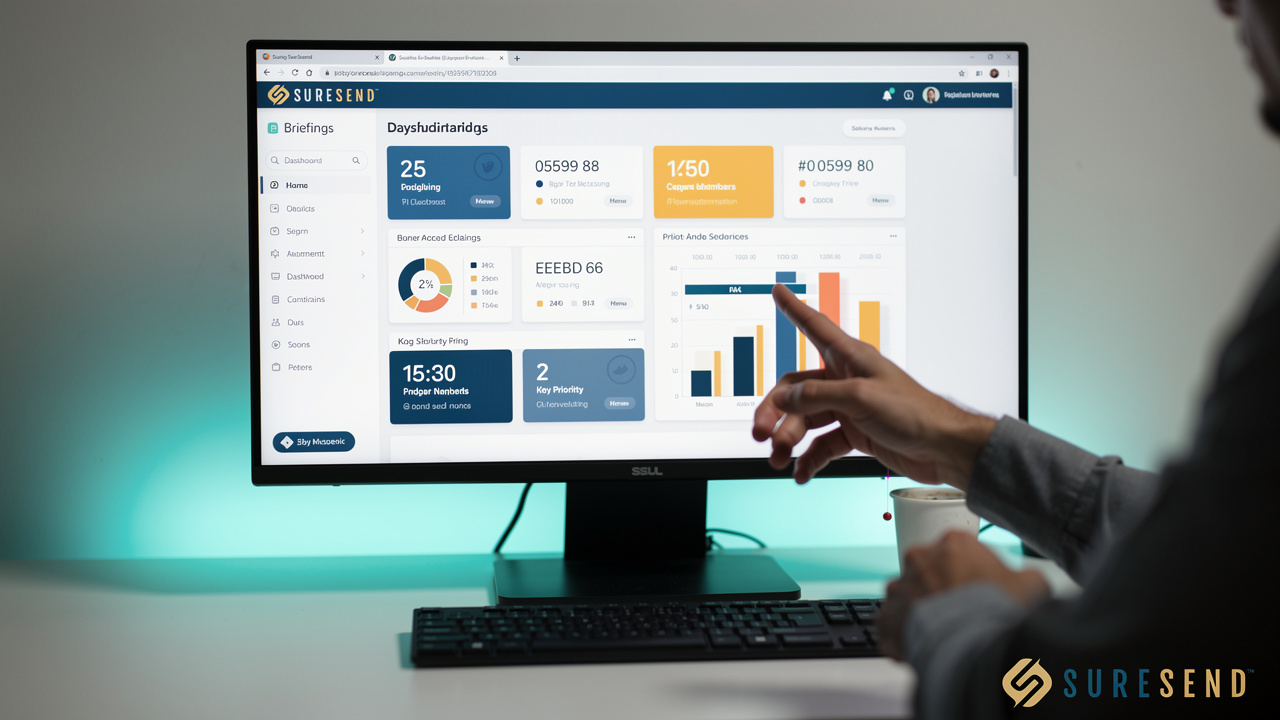
Sure Send is an AI-first CRM built around exactly this problem, where lead scoring, Smart Insights, and the Win the Day dashboard surface who to contact and why, every single morning, without an agent having to dig for it. The platform’s Winning Formula assigns a pipeline dollars based on an agent’s own six-month conversion history, so priorities are grounded in that person’s actual numbers instead of a generic best practice.
Trigger-based outreach inside the platform reactivates past clients automatically around equity, rate, and anniversary milestones, which directly addresses the repeat-business gap covered earlier. It was built by people who worked in high-pressure sales roles themselves, so its workflows match how agents actually operate day to day rather than how a product team imagined they might.
How To Measure Whether This Is Actually Working
Measuring whether an AI-driven approach is working means tracking the metrics tied to speed and consistency, not just a raw lead count that can be misleading on its own. Response time shows whether new inquiries are getting answered in minutes instead of hours. sales performance dashboards reveals whether the prioritization is actually sending agents toward the right people first. Reactivation rate on past clients shows whether that dormant 76% is finally turning into real conversations again.
Comparing cost-per-closed-deal from database and referral work against paid lead channels usually makes the case clearly, especially as research on digital marketing’s influence on buying intention shows how engagement and trust signals shape a buyer’s final decision as much as ad exposure does.
Response time. Track how quickly a new inquiry gets a first reply, since this single number correlates directly with appointment-setting success.
Contact-to-appointment rate. This shows whether AI prioritization is actually surfacing the right contacts, not just more contacts overall.
Reactivation rate. Measure how many past clients re-engage after a milestone-triggered outreach, which is the clearest signal the repeat-business system is working.
Signs You’re Leaving Pipeline On The Table
A few warning signs usually show up before an agent even runs the formal numbers. Past clients who haven’t heard from the agent in six months or more are a clear signal that referral pipeline is quietly leaking away unnoticed.
Leads marked “not ready” months ago and never revisited are another common gap, since circumstances change but the follow-up schedule often doesn’t. And if five leads arrive at once with no clear system for who gets the first callback, that’s a sign speed-to-lead is left to chance instead of design.
The Takeaway
Growing a pipeline doesn’t require a bigger ad budget. It requires converting the contacts already sitting in the database faster and more consistently than before, which is exactly where AI for real estate leads earns its keep.
The role of AI here is simple: surface the right contact at the right moment and make sure nobody goes quiet for months at a time. Before increasing the next ad spend, audit the database and the follow-up process first; the next closed deal is probably already in the system, just waiting on a timely nudge from a platform like Sure Send.
Frequently Asked Questions
Is AI Lead Generation Only Useful For Large Teams, Or Does It Work For Solo Agents?
Solo real estate agent often benefit even more than large teams, since they have less time per lead and no assistant to track follow-up manually. Automation replaces the manual tracking a team of assistants would otherwise handle, which makes consistent follow-up possible for a one-person operation.
How Much Does AI Lead Management Software Typically Cost For A Real Estate Agent?
Pricing varies by platform and lead volume, typically ranging from affordable monthly plans for solo agents to higher tiers for teams managing larger databases. The better way to frame cost is against time saved and deals recovered from database reactivation, not just the subscription price alone.
Can AI Replace Personal Follow-Up Calls And Relationship-Building With Clients?
No, AI handles timing, prioritization, and routine touchpoints, but it doesn’t replace the actual conversation that builds trust. The best results come from AI surfacing exactly who to call next, while the human still handles the call itself.
How Long Does It Take To See Results After Implementing AI Lead Follow-Up?
Faster response time typically shows up almost immediately in higher appointment rates, often within the first few weeks. Database reactivation and referral pipeline usually build over 60 to 90 days as milestone-triggered campaigns run their course.
Does Using AI For Follow-Up Feel Impersonal Or Spammy To Clients?
It can, if the automation relies on generic, high-frequency blasts that ignore context. Milestone-based triggers tied to real events, like an anniversary or rate drop, tend to feel timely and relevant instead of pushy or robotic.
What’s The Difference Between AI Lead Scoring And Traditional CRM Tagging?
Traditional CRM tagging relies on manual input and an agent’s memory of what happened in a prior conversation. AI lead scoring continuously updates based on real behavior and historical conversion patterns, so the ranking stays current without anyone touching it.

Written by