


Real Estate Automation That Creates Conversations, Not Just Activity
Send enough automated texts and emails, and the activity dashboard looks great. Open rates climb, drip sequences fire, and the CRM shows hundreds of touches every week. But if none of those touches turn into an actual phone call, a coffee meeting, or a signed offer, the automation isn’t doing its job. Real estate automation handles things like instant lead response, data entry, appointment reminders, lead routing, and milestone outreach to past clients, the repetitive tasks eating your week, so you get more time back for the conversations that actually close deals.
This article breaks down exactly which tasks belong to automation and which still need you personally, how automation genuinely improves lead conversion, what personalization at scale actually looks like, how to pick the right tools, and how to measure success by conversations and appointments instead of raw message volume. Sure Send, an AI-first CRM built for real estate and mortgage professionals, shows up throughout as one example of this approach in practice. Keep reading to see where your current setup might be creating noise instead of real conversations.
Key Takeaways
Automation should be judged by conversations started and appointments booked, never by the number of messages sent out.
Some tasks belong to automation, like follow-up timing, data entry, and lead routing, while negotiation and relationship nuance still need the agent.
Speed to lead and real personalization are the two factors that move conversion rates the most.
A fragmented tool stack usually creates more admin work, not less, because data gets stuck between systems.
AI works best embedded directly in daily workflow rather than bolted on as a separate feature nobody opens.
What Is Real Estate Automation, and Why Does It Matter Now?
Real estate automation is software, inside CRMs, email platforms, and AI dialers that takes over repetitive, rule-based tasks like lead confirmation, data entry, appointment reminders, and routing across lead capture, follow-up, and client communication. For residential agents, that means automating tasks that don’t need judgment, like confirming a new lead instantly or logging a phone number, while leaving real decisions to the agent.
This kind of automated real estate marketing matters more now because the market has tightened, with median home prices stabilizing near $410,700 and growth of roughly 2% year-over-year. In that kind of market, real estate automation marks the difference between an agent who replies in minutes and one who replies the next day.
Why Agents Can’t Keep Up Manually Anymore
A single agent handles more competing demands than the job description ever mentions. New listings need checking against client criteria, showings need scheduling, and leads need a same-day callback. On top of that, market trends need tracking and past clients need a reason to keep hearing from you.
These systems don’t break down because agents are lazy; they break down because the math stops working past a certain volume. Once a pipeline grows past a handful of active leads, manual follow-up alone can’t keep pace with every text, call, and reminder that needs to happen on time. That’s the point where real estate technology stack stops being optional and starts being the only way to keep every lead and client covered.
Which Tasks Should You Automate (And Which You Shouldn’t)?
The clearest way to decide what belongs to automation is to ask whether a task requires judgment or just consistency. Automation for real estate agents works best on tasks that are repetitive, time-sensitive, and don’t change much from one lead to the next, like confirming a new inquiry or logging contact details. Anything that involves reading a client’s tone, negotiating terms, or making a judgment call during a transaction still needs a human on the other end. Used well, real estate automation doesn’t replace the conversation; it creates the space and the timing for one to happen.
Tasks Automation Should Own
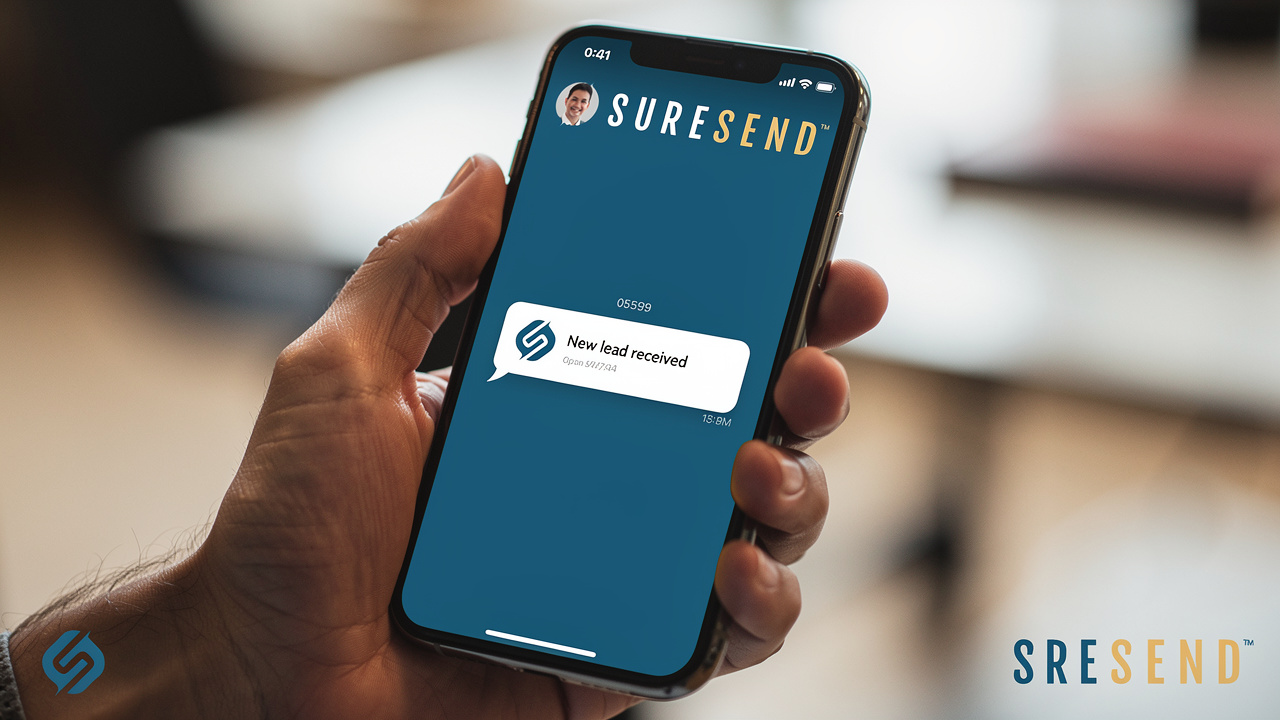
Some tasks are nearly impossible to get right by hand once volume grows, and these are exactly where automation pays off fastest. Speed matters most here, since leads contacted within five minutes are 21 times real estate lead conversion rate than those reached later, based on widely cited response-time research.
Instant lead response and confirmation. The moment a prospect fills out a form, automation can send a confirmation and alert the agent in seconds. This single habit captures the five-minute conversion window that manual review almost always misses.
Data entry and CRM record-keeping. Contact details, preferences, and notes can flow into the CRM automatically from forms, calls, and texts. This keeps records accurate without anyone typing the same information twice.
Lead routing by territory or specialty. New inquiries can route straight to the agent who covers that neighborhood or price range. This removes the delay that happens when leads sit in a shared inbox waiting to be noticed.
Milestone reminders for past clients. Closing anniversaries, birthdays, rate drops, and equity changes can trigger a message automatically. These moments give agents a natural reason to reach back out.
Basic FAQ responses. Common questions about a listing’s price, square footage, or showing times can get instant automated replies. This frees the agent for questions that actually require real estate expertise.
Tasks That Still Need You
Automation should never take over the moments where real relationships are built or saved. Negotiation, objection handling, and reading emotional cues during a stressful transaction all require a human who can adapt in real time, not a script. The same goes for the first substantive conversation with a hot lead, where automation’s job is to make the handoff smooth, not to stand in for the agent.
Nuanced, high-stakes conversations, like discussing a price reduction, responding to a lowball offer, or working through inspection issues, call for relationship management. It’s worth a warning here too: over-automating personal touches, like sending a fully AI-written birthday message or condolence note, can read as hollow and quietly damage the trust an agent worked hard to build.
How Does Automation Actually Improve Lead Conversion?
Automation improves lead conversion mainly by closing the gap between a prospect’s interest and an agent’s response. Instant automated responses capture leads inside that critical five-minute window, when conversion rates run as much as 21 times higher than for leads contacted after even a short delay. Beyond speed, personalized nurture sequences keep a lead engaged over days and weeks instead of forcing a yes or no on the first contact. That combination, fast first contact plus relevant, ongoing nurture, is what turns real estate marketing automation from a time-saver into a direct revenue driver.
The Cost of Slow or Generic Follow-Up

Slow or generic follow-up is one of the most expensive habits in real estate, even though it rarely looks expensive day to day. In Pied Piper’s Real Estate Lead Handling Effectiveness Study, 68% of website inquiries to large real estate brands got no response within 24 hours, which ranks among the largest and most fixable revenue leaks an agent can address. Manual follow-up simply can’t keep pace once lead volume grows, no matter how dedicated the agent is, and deciding how often to follow up only matters if the first follow-up happens at all.
The same pattern shows up with past clients, where industry research puts the number of people willing to database reactivation at around 76%, yet only about 12% actually do. That gap exists not because clients changed their minds, but because agents stopped staying present once the closing was done. Closing both gaps, the callback gap and the repeat-business gap, is less about hiring more help and more about making follow-up automatic.
What Does Automation-Driven Personalization Actually Look Like?
Automation-driven personalization means outreach that references a client’s real situation instead of a generic template everyone gets. A generic drip blast might say “check out these new listings,” while context-aware outreach mentions the exact neighborhood, price range, or recent activity a specific contact cares about. Broader research on personalization at scale consistently shows it improves both client satisfaction and business results, which is exactly why this distinction matters. AI lead scoring make this kind of personalization realistic for every agent on a team, not just the ones comfortable building complex filters.
Trigger-Based Outreach That Feels Relevant

Trigger-based outreach uses real-world signals to decide when to reach out, instead of sending messages on a fixed calendar. Property value changes, rate drops, equity milestones, and closing anniversaries all work as database segmentation that give an agent a timely, relevant reason to reconnect. This approach is what actually closes the gap between clients who say they’d use the same agent again and the small share who actually do, without requiring a manual review of old files every month.
Sure Send’s AI-powered Smart Insights apply this idea inside the CRM, generating personalized next-step suggestions that reference a contact’s actual price range, neighborhood, and history. Because the suggestion is grounded in real client data instead of a generic script, the resulting outreach reads as sharp and specific rather than like another automated real estate marketing blast.
How Do You Choose the Right Real Estate Automation Tools?
Choosing the right tools starts with accepting that most agents need one central hub, not a dozen disconnected apps doing overlapping jobs. A CRM works best as that hub, holding every contact, conversation, and transaction management in one place, with a handful of connected specialist tools feeding it data. The real tradeoff is between a real estate-specific CRM that understands triggers like closing dates and listing status, and a general sales CRM that’s flexible but needs heavy setup to fit the industry. Getting this choice right early saves months of rebuilding workflows later, after a team has already grown attached to a tool that can’t keep up.
What to Look for in an Automated Real Estate Marketing Platform
A platform worth adopting needs to cover a short, practical checklist rather than an impressive features page.
Multi-channel follow-up. Email and SMS marketing, so a lead who ignores one channel still gets a real shot at a reply through another.
Lead scoring and pipeline visibility. The platform should show where leads actually stall, not just how many messages went out. This turns raw activity counts into a map of what’s working.
Open API, webhooks, and pre-built integrations. Connections to IDX, transaction tools, and marketing apps keep data flowing instead of trapped in separate systems.
Sure Send was built specifically for high-pressure sales roles in real estate and mortgage, with Take Action Automation surfacing quiet leads before they go cold and Smart Lists letting reps search in plain language instead of wrestling with complex filters.
Where General CRMs and Point Solutions Fall Short
CRMs usually require heavy customization just to recognize basic real estate triggers like a closing date or a listing status change. Even after that setup work, these systems still miss the industry-specific nuance that a purpose-built platform captures by default.
The opposite mistake is stitching together separate point solutions, a CRM with a IDX website here, a drip email tool there, a standalone transaction manager somewhere else. Every one of those gaps creates a data silo, and context gets lost every time a lead moves from one tool to the next. Open systems with strong integrations now beat all-in-one monoliths precisely because they keep that context connected without forcing a team into one rigid platform.
| Approach | Strength | Common Gap |
|---|---|---|
| Generic sales CRM | Flexible, familiar interface | Needs heavy setup for real estate triggers |
| Disconnected point solutions | Each tool excels at one job | Data silos, lost context between systems |
| Real estate-specific CRM with open integrations | Industry triggers built in, connects to existing stack | Still needs the agent to run the conversation |
How Should You Measure Automation Success (Conversations, Not Just Activity)?
Automation succeeds when it produces more real conversations and booked appointments, not when the activity dashboard looks busy. Messages sent and emails opened are vanity metrics; a lead can open ten emails and never pick up the phone, so neither number says much about actual business impact. The sales performance dashboards are response time, two-way conversations started, appointments booked, and conversion rate broken down by lead source. Once a team starts watching those four numbers instead of volume, it becomes obvious which parts of real estate automation are actually working.
Metrics That Actually Predict Revenue
A simple scorecard built around four or five numbers replaces guesswork with a clear read on what’s working.
Lead response time, measured in minutes rather than hours, since this single number predicts more about conversion than almost anything else a team tracks.
Two-way conversations per week, counting replies and calls rather than messages sent, because a conversation is the actual unit of progress toward a closed deal.
Appointment-to-conversation ratio, which shows how often a real conversation turns into a booked showing or consultation.
Repeat and referral activation rate from the past-client database, since this number reveals whether past clients are actually hearing from the agent again.
If a dashboard only tells you how much went out, it isn’t telling you whether anything came back.
Sure Send’s real-time, EOS style approach tracks these exact patterns, and its Winning Formula ties daily activity to real dollar value based on each rep’s own six-month conversion history rather than a generic industry benchmark.
How Do You Roll Out Automation Without Losing the Personal Touch?

Rolling out automation works best as a sequence, not a single overnight switch. Start by auditing where time actually goes during a normal week, then automate the highest-volume, lowest-judgment tasks first, like lead confirmation and data entry. Expand from there only once the basics are running smoothly and the team trusts the system. The most common failure modes are over-complicating workflows from day one, adopting too many disconnected tools at once, and skipping training on the tools a team already pays for.
A Simple Starting Sequence
The highest-return, lowest-risk place to start is instant lead response paired with milestone-based outreach to past clients, since both run on data that’s already sitting in the CRM. Neither one touches a sensitive conversation, so there’s little risk of the automation reading as impersonal.
Once that foundation is stable, add call data gaps so leaders can coach from real conversation data instead of guesswork about what happened on a call. Drip campaign setup, outbound AI calling, and deeper CRM workflow building are worth layering in as a second phase, once the basics are running well, and each deserves its own closer look beyond this overview.
The Takeaway
The goal of real estate automation was never to send more messages; it’s to create more real conversations and booked appointments. Let automation own speed and consistency, instant lead response, data entry, routing, and milestone reminders, while you keep the moments that need judgment, like negotiation, objection handling, and the first real conversation with a hot lead.
Sure Send was built around this exact idea, pairing AI-driven personalization with conversion-pattern insights for team leaders and an open integration model that fits into a tech stack a team already trusts. Before adding another tool or another drip sequence, take a hard look at your current setup against the metrics covered here, response time, conversations started, and appointments booked, and see where the gaps really are.
Frequently Asked Questions
Is Real Estate Automation Only Useful For High-Volume Agents And Teams?
No, solo real estate agents often benefit the most, since automation can save up to 20 hours a week that would otherwise go to data entry and follow-up, letting one person handle work that used to need extra hires. Teams benefit differently, mainly through consistency, since no lead falls through the cracks just because one rep is busy that day.
How Much Does Real Estate Automation Software Typically Cost?
Costs range from free or low-cost point tools up to several hundred dollars a month for a full CRM platform with built-in automation. The number worth watching is return on investment: if automation saves even a few hours a week, that time, valued against billable agent hours, usually covers the subscription within the first month.
Will Automated Messages Make My Outreach Feel Less Personal?
Only if the automation relies on generic templates that ignore who the contact actually is. Context-aware automation that references a client’s real price range, neighborhood, or recent activity tends to feel more relevant, not less personal, because the message actually matches their situation instead of reading like a mass blast.
Can AI Automation Replace A Real Estate Agent’s Role In A Transaction?
No, negotiation, emotional intelligence, and judgment calls during a transaction still require a human who can read the room and adapt. AI’s role is to clear the administrative bottlenecks, lead response, data entry, reminders, so agents have more time and attention left for the moments that actually require their experience.
How Do I Know If My Current Automation Setup Is Actually Working?
Check conversation and appointment counts first, not just how many messages went out. If lead response time is slow or conversion rate by source hasn’t moved in months, the automation is likely producing activity without producing real progress, and it’s worth reviewing the workflows behind those numbers.
What’s The Difference Between Marketing Automation And Workflow Automation In Real Estate?
Real estate marketing automation focuses on best email marketing, drip campaigns, and ads. Workflow automation covers the internal processes that support an agent’s daily operations, like task routing, reminders, and data syncing between systems. Most teams need both working together, not just one or the other.
How Quickly Should A New Lead Be Contacted After They Submit An Inquiry?
Aim for five minutes or less, since leads contacted within that window convert up to 21 times more often than those reached later, according to widely cited response-time research. Automated instant response bridges that gap immediately, confirming the inquiry until a personal follow-up call or text happens shortly after.