


Real Estate Drip Campaign Automation: Why Most Sequences Never Reach the Inbox
You build a real estate drip campaign automation sequence, load it with market updates and listing alerts, and wait for replies. Weeks pass and the inbox stays quiet, so you assume the emails or the timing missed the mark. More often the real problem sits lower in the system: the trigger that started the sequence was wrong, nothing told it to stop, or the list behind it was already stale. The best drip campaign automation software for real estate agents fixes these structural gaps first, pairing CRM automation with a delivery system built to land in the inbox rather than guess at it. Sure Send is one platform built around that idea, combining trigger-based sequences with its own email infrastructure. This article works through how to set up a real estate drip campaign automation sequence correctly, covering triggers, segmentation, timing, and exit rules, plus the specific reasons sequences quietly stop reaching inboxes. Read on to see where your own setup might be leaking leads.
Key Takeaways
A real estate drip campaign automation sequence is only as good as its starting trigger. The wrong trigger event enrolls the wrong people from day one, and nothing downstream fixes that.
Exit rules matter as much as entry rules. A reply, a booked appointment, or a stage change should stop a sequence automatically, not days later.
Sending to unengaged or outdated contacts is a deliverability risk, not simply a wasted email, and it drags down every other sequence sharing that sender reputation.
Replies and booked conversations predict closings far better than open rates or send volume ever will.
What Is a Real Estate Drip Campaign, and Why Do Most Fail Before They Start?

A real estate drip campaign automation sequence is a pre-built, automated series of emails, texts, or calls that a lead moves through once a specific action or event sets it off. It is not a calendar blast sent to a static list on a fixed date. The sequence belongs to one contact and responds to what that contact does, not to a date on a calendar. Agents build it inside a real estate CRM so new leads, active buyers, and past clients each follow a path built around their stage.
Most of these sequences fail long before a prospect reads the first line, and the cause is rarely the writing. Three structural gaps explain nearly every underperforming real estate drip campaign automation sequence: the wrong event started it, no one segmented leads by type or stage first, and nothing told the automation to stop once the lead replied. Weak subject lines get blamed constantly, but a well-triggered sequence with clean exit logic will beat better copy running on a broken setup.
Those three gaps map directly to the setup questions this article answers: which trigger should start a sequence, how to segment leads before building one, and what rules should stop a drip automatically. Each one carries more weight than the message copy sitting inside the sequence itself.
How Do You Choose the Right Trigger to Start a Real Estate Drip Sequence?
The right trigger for a real estate drip campaign automation sequence is the specific lead action or lifecycle event that should fire the first message, not a fixed calendar date. Time-based triggers that fire on Day 1, Day 3, and Day 7 regardless of lead behavior are the weakest option because they ignore what the prospect is actually doing. Behavioral and event-based triggers, like a new lead captured, a showing request, or a price drop on a saved listing, respond to real signals instead of a clock. Disposition-based triggers go one step further, tying the next action to the outcome of the last touch, such as no answer, left voicemail, or callback requested. The sections below cover the trigger types worth building a drip sequence around.
New lead captured. When a contact fills out a site form, requests information through an IDX widget, or gets pulled in through an ad campaign, that capture event should fire the first message within minutes, not after a manual review. Rapid response matters because a lead who hears from two agents in the first hour real estate lead conversion replied first. Leads entered through an API or email parsing can be actioned in under a minute without an agent touching the record at all.
Showing or appointment activity. A showing request, a confirmed appointment, or a no-show should each start a distinct branch of automation rather than feeding into the generic new-lead sequence. A no-show, for example, should trigger an auto-reschedule message instead of silence or an awkward check-in email sent a week later.
Property and listing events. A price drop, a new listing matching a saved search, or a status change from active to pending are triggers tied to the property itself rather than the person. These keep a sequence relevant to market conditions instead of running on autopilot regardless of what is happening in a prospect’s price range.
Call disposition. The outcome of a phone call, such as no answer, left voicemail, or callback requested, should route the contact into the next step automatically. A no-answer call disposition data might trigger a text and an email within five minutes, while a callback request sets a task and reminder for the exact time the lead asked to be reached.
Entry Triggers by Lead Source
Different lead sources need different starting triggers rather than one generic new-lead sequence applied across the board. An IDX or home search lead typically needs a gentle, exploratory first message, since the prospect is early and still forming criteria. A site-form lead who asked about a specific property can get a more direct reply referencing that listing. A home valuation request should trigger a seller-specific track, not a buyer sequence, and a past client’s closing anniversary or referral window should start a dedicated relationship touch instead of a prospecting message.
Speed compounds the value of a correct trigger. Leads captured through an API or email parsing should move into their matching sequence within minutes of entry, since manual review delays the exact moment a prospect is most likely to respond.
How Do You Segment Leads by Type and Stage Before Building a Sequence?

Segmenting leads by type and stage means sorting contacts, buyer, seller, sphere of influence, and past client, by where each one sits in the pipeline before building a single sequence. This decision shapes what a contact actually receives, which matters more than almost anything else in real estate drip campaign automation. A buyer and a seller dropped into the same real estate CRM features each get content that half-ignores their real situation. Mis-segmentation, like sending active listings to a seller who only wants a valuation, is one of the most common setup mistakes and quietly trains recipients to stop opening future messages.
Lead type determines content category. Buyer leads need listings, financing tips, and neighborhood information, while seller leads need comparable sales data, staging guidance, and market timing insight. Sphere of influence contacts, people who already know the agent personally, need light-touch newsletters and invitations rather than active sales content. Past clients fall into their own category entirely, since the relationship has already closed and the goal shifts from converting to retaining and generating referrals.
Pipeline stage determines message urgency. A brand-new lead needs a welcome message and some exploratory questions, not a hard sales pitch. An active buyer or seller under contract needs transaction updates, inspection reminders, and closing countdowns rather than generic market content. A lead that has gone quiet for sixty days or more belongs in a slower, long-horizon nurture track instead of the fast-cadence sequence built for hot prospects.
Tagging at capture prevents mis-segmentation later. A CRM that automatically tags a contact by source and by the form or page that generated the lead makes correct database segmentation. Without that tag, agents are left guessing which sequence actually matches a contact’s situation, and guesswork is exactly what causes buyer content to land in a seller’s inbox.
Engagement level refines the segment further. Two buyer leads at the same pipeline stage can need different treatment if one opens every email and clicks listings weekly while the other has gone silent for a month. Folding AI lead scoring, not just type and stage, keeps a real estate CRM drip automation setup relevant instead of static.
Sequence Types Mapped to Lead Status
Mapping sequence type to lead status gives agents a quick reference for which track a contact belongs in, rather than deciding case by case. The table below reflects four status groups that appear across nearly every setup for a drip campaign in a real estate CRM, each with its own content focus.
| Lead Status | Sequence Focus |
|---|---|
| New Leads | Welcome message, property alerts, neighborhood and market education |
| Active Buyers/Sellers | Transaction updates, inspection reminders, closing countdowns |
| Past Clients | Anniversary greetings, neighborhood-specific market updates, referral requests |
| Sphere of Influence | Monthly newsletters, light check-ins, roughly six touches a year |
These four tracks are not rigid. A contact can move between them automatically as their status changes, a new lead becomes an active buyer, an active buyer becomes a past client, and lead nurturing tools the moment their stage does.
How Do You Set Timing and Cadence Without Overwhelming or Underwhelming Leads?
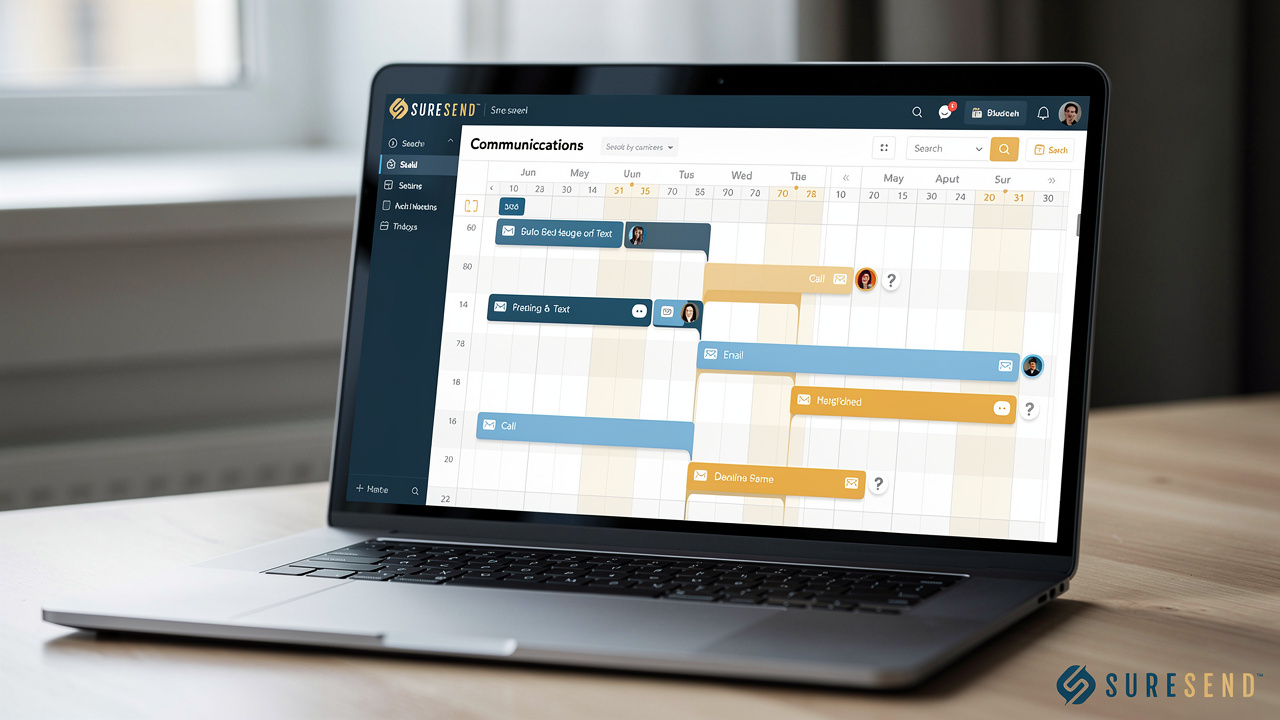
Timing and cadence in a real estate drip campaign automation sequence should match a lead’s urgency, not a single fixed schedule applied to every contact. A hot lead in the first week after capture needs a faster, denser cadence, often a call attempt, a text, and an email within the first few days. A warm or cold lead with a longer timeline needs a cadence spread across weeks or months instead of days. Matching pace to urgency keeps the sequence relevant instead of overwhelming an early-stage browser or under-serving someone ready to buy now.
Consistency matters more than raw frequency. A follow-up frequency guidance that shows up every week or two outperforms a burst of five emails followed by a month of silence, since sporadic contact feels unplanned and reads as careless rather than attentive.
The goal is a rhythm a lead can expect, not a maximum number of touches crammed into a short window. Message copy and exact send frequency deserve their own close look elsewhere; the setup principle here is pacing cadence to where a lead actually stands in their process.
What Exit Rules Should Stop a Drip Campaign Automatically?
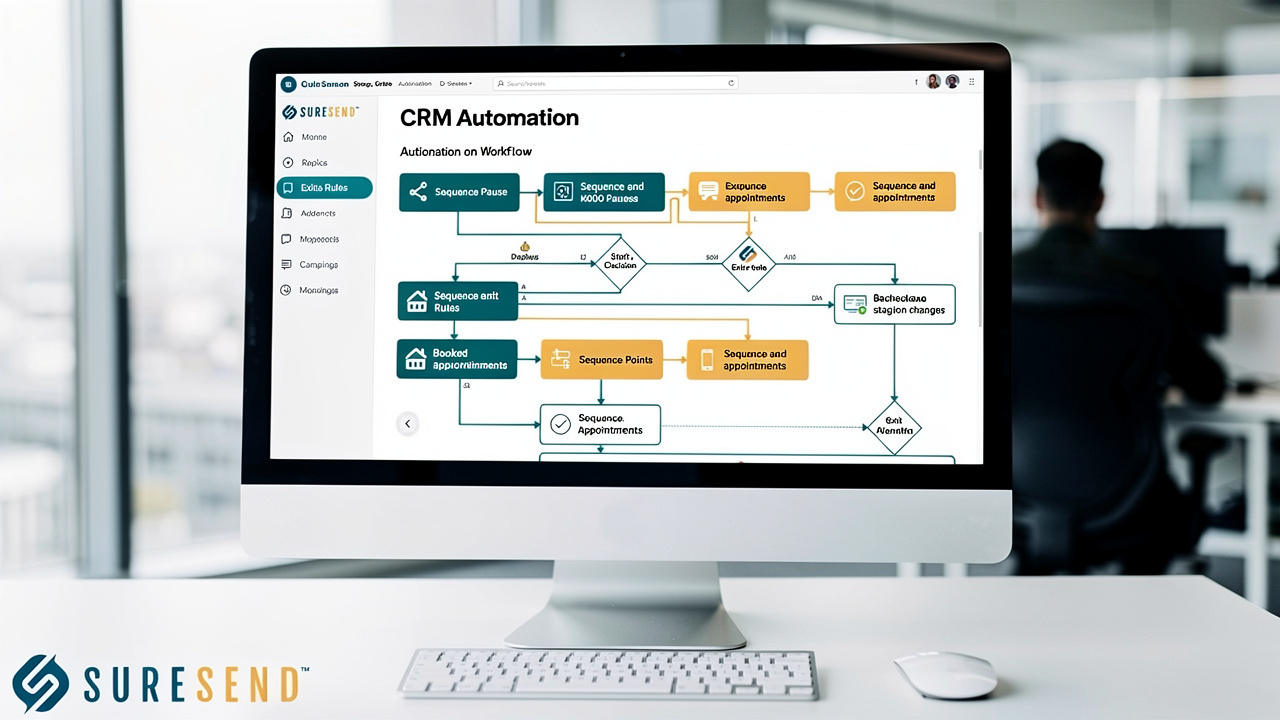
A drip campaign should stop automatically the moment a lead replies, books an appointment, or moves to a new pipeline stage, since continuing to send scripted messages after that point breaks the relationship rather than supporting it. Without this exit logic, a prospect who just booked a showing can still receive a “haven’t heard from you” email the next morning, which reads as careless at best. Exit rules should also re-route the contact, pausing the drip and creating a task for a human follow-up rather than letting a parallel automated message keep firing. A sequence without exit rules is not a complete real estate drip campaign automation setup, since it never when to stop following up that can happen inside it: a response.
Reply received. Any reply, whether a question, a one-word “interested,” or a request to stop, should immediately pause every other message queued in that sequence. The reply means the contact is now in an active conversation, and an agent, not a template, should carry it forward from that point.
Appointment booked. Once a showing, listing presentation, or consultation gets booked on the calendar, the drip tied to winning that appointment has done its job and should stop. A new sequence built around the appointment itself, like a reminder the day before, can take over instead.
Stage change in the pipeline. A lead moving from new to active, or from active to under contract, signals that the content built for their old stage no longer fits. The CRM should detect the stage change and automatically move the contact into the sequence built for where they are now.
Unsubscribe or opt-out. Any request to stop contact should take effect immediately and across every channel, not just the one where the request arrived. A contact who unsubscribes from email but keeps getting texted has not actually been removed from the sequence.
No-show handled separately from silence. A missed showing is not the same as a lead who never responds at all. A no-show should trigger an auto-reschedule attempt rather than ending the sequence outright, since the appointment still needs to happen.
Why Ignoring Replies and Unsubscribes Breaks Trust and Deliverability
Sequences that keep firing after a lead has replied or unsubscribed do more damage than an awkward moment. Each ignored reply trains that recipient to stop opening future messages, since the agent has shown the sequence does not actually listen. Repeated sends to someone who already asked to stop increase emails going to spam, and spam complaints affect a sender’s standing with every other contact sharing that sending environment, not just the one person who complained.
Handling replies and TCPA compliance rules inside the CRM, not as a manual cleanup task an agent gets to once a week.
By the time a weekly review catches the problem, the damage to that relationship, and to deliverability more broadly, has already happened.
Why Do So Many Real Estate Drip Sequences Never Reach the Inbox?
Real estate drip sequences often go unanswered because the emails never actually land in the inbox, not because the content missed the mark. Sending consistently to old or unengaged contacts drags down a sender’s standing over time, and real estate carries the highest bounce rate of any industry tracked, at 13.84%, nearly double the all-industry average, based on industry deliverability benchmark research.
A sequence with no step limit and no exit logic keeps hitting those same unengaged inboxes again and again, which signals low relevance to inbox providers over time. Deeper technical fixes like email authentication guide and sender reputation tools matter here too, though Sure Send has published separate articles covering those topics in detail.
Stale and unengaged contacts drag everything down. A list built up over years without regular cleaning ends up full of dead addresses, changed jobs, and people who tuned out long ago. Sending the same volume of email to that list as to an active, engaged one tells inbox providers the sender does not pay attention to who is actually receiving mail.
Sequences with no finish line keep hitting cold inboxes. A real estate drip campaign automation sequence built without a step limit or an exit condition does not know when to stop, so it keeps reaching the same unengaged recipients month after month. Each ignored send to that same cold contact adds up, and inbox providers read that pattern as a sign the sender is not relevant to that recipient.
Volume concentrated on too few addresses causes trouble fast. A large batch send to a list that has not been segmented or cleaned looks very different to an inbox provider than the same number of emails spread naturally across smaller, relevant groups. Segmentation, covered earlier in setup, also doubles as a deliverability safeguard.
Real estate lead automation sequences amplify the problem at scale. A single sequence running across hundreds of stale contacts multiplies small reputation issues into a much larger one, since every unengaged send from that sender adds to the pattern inbox providers track over time.
Technical setup still matters, just not as the focus here. Authentication records, sending reputation, and spam filter behavior all affect inbox placement, and Sure Send covers each of those in dedicated articles elsewhere.
The List Decay Problem Most Agents Never Address
Contact lists lose value every year even when no one touches them, since people change jobs, switch email addresses, and simply stop checking accounts they used years ago. Email lists lose roughly 22.5% of their value annually, yet only about 25% of senders clean their lists on a monthly basis, leaving most real estate CRM databases carrying a large share of inaccurate or database reactivation strategies.
clean a real estate database removing stale, invalid, or long-unengaged contacts on a set schedule, belongs in the setup process itself, not as a project to get to someday. Treating cleanup as a routine habit protects a sender’s standing for every sequence running through that account, including the ones built correctly in every other respect.
How Should You Measure Success Through Replies and Conversations, Not Sends
Success in real estate drip campaign automation should get measured by replies and booked conversations, not by how many emails went out or how many were opened. Open rates and send volume describe activity, not outcomes, and a sequence can show strong opens while producing zero actual conversations. Replies, appointments booked, and conversations started are the numbers that predict whether a sequence is actually moving leads toward a closing.
A sequence with modest open rates but a steady trickle of replies is working, even if the numbers look unimpressive on a dashboard. A sequence with a high send volume and strong opens but zero replies has failed, regardless of how good the surface metrics look. The difference between those two sequences is the only one worth tracking closely.
Tracking reply rate and appointments booked by individual sequence, not just in aggregate across the whole database, shows which specific track is actually producing conversations. That level of detail points directly at which sequences need a second look and which ones can keep running as they are.
How Sure Send Builds Drip Automation That Actually Reaches the Inbox
Sure Send approaches real estate drip campaign automation by treating inbox placement as part of the automation itself, not a separate problem left to a third-party email provider. The platform runs its own email delivery infrastructure rather than renting space on shared sending systems, which gives it more direct control over the factors that decide whether a sequence lands or disappears into a spam folder.
That infrastructure pairs with automatic protections built into the sending process. It blocks SMS sends to landline and invalid numbers before they go out, scans contacts against Do Not Call list through its ezVerify.ai integration, and keeps a dedicated deliverability team watching the sending environment, so technical housekeeping happens in the background instead of becoming a separate project.
On the automation side, the platform SMS marketing strategies inside trigger-based sequences, starting from events like a new lead, a showing request, or a call disposition rather than a fixed calendar date. Its Take Action feature surfaces which contacts need outreach each day based on engagement and timing rather than an alphabetical list, so reps follow up on what is actually happening instead of guessing.
The system also adjusts send timing for each contact based on how that specific person engages, rather than sending every message in a sequence at the same hour for everyone. For a team trying to fix the structural gaps covered in this guide, triggers, segmentation, exit rules, and list hygiene, that combination addresses the setup and the delivery problem at the same time.
The Takeaway
Most real estate drip campaign automation sequences that go quiet are not failing because of weak writing. They are failing for structural reasons: the wrong trigger, no segmentation by lead type or stage, missing exit rules, and contact lists no one has cleaned in years. Fixing those four things before touching another subject line changes far more than another round of copy edits ever will.
Before writing another sequence, audit the ones already running. Check what triggers them, whether they stop when a lead replies or books an appointment, and how stale the list behind them has gotten. A platform built for real estate automation and inbox placement, like Sure Send, removes much of that manual auditing by handling triggers, exit logic, and deliverability together.
Frequently Asked Questions
How Many Steps Should a Real Estate Drip Campaign Have?
Entry-level platforms that cap sequences at five to ten steps run out long before a typical six to twelve month buyer cycle ends. Aim for 15 to 20 touchpoints spread across the full expected cycle so the sequence still has something relevant to send near the end.
Should a Drip Campaign Stop if a Lead Doesn’t Respond at All?
No, silence is not the same as an unsubscribe. Shift a non-responsive lead into a lower-frequency, long-term nurture track instead of cutting off contact entirely, while still removing contacts that turn out to be genuinely stale or invalid over time.
Can You Run Email, Text, and Voicemail Drips at the Same Time?
Yes, coordinated multi-channel sequences across email, text, and voicemail are standard practice in real estate drip campaign automation. The key is tracking the last contact date and channel for each lead so touches do not overlap or duplicate.
What’s the Difference Between a Drip Campaign and a One-Off Email Blast?
A drip campaign is triggered, sequential, and automated based on a contact’s own behavior and stage. A blast is a single manual send to an entire list at once, with no trigger tied to the individual and no exit logic built in.
How Do You Know if a Drip Campaign Is Actually Working?
Track reply rate and appointments booked by sequence, not just open rates. A sequence generating real conversations even with modest open numbers is outperforming one with high opens and strong-looking metrics but zero actual replies or bookings.